7 Underrated Luxury Brands You Haven't Considered
Discover 7 underrated luxury watch brands offering elite craftsmanship and value, including Raymond Weil, Maurice Lacroix, and Frederique Constant.

Feb 14, 2026 - Written by: Brahim amzil
7 Underrated Luxury Brands You Haven’t Considered
The most underrated luxury watch brands that offer exceptional craftsmanship, heritage, and status without the inflated premiums of mainstream giants are Raymond Weil, Maurice Lacroix, Frederique Constant, Oris, Longines, Nomos Glashütte, and Junghans. While the general public chases the waitlists of Rolex or Patek Philippe, these seven manufacturers are quietly producing “Swiss Made” (and German) masterpieces featuring in-house movements and superior finishing, often delivering a higher value-to-price ratio than their more famous competitors.
The Case for Quiet Luxury
Let’s be honest for a second. Walking into a boardroom or a dinner party with the same recognizable crown logo on your wrist as three other people in the room doesn’t scream “connoisseur.” It screams “safe choice.”
There is a distinct thrill in wearing a timepiece that demands a second look. It’s the difference between buying a label and buying legitimate horological pedigree. When you opt for brands that fly under the radar, you aren’t paying for the massive billboard marketing budgets; you are paying for the steel, the gears, and the finishing. You’re signaling that you’ve done your homework.
Below, we break down seven heavy hitters that are punching way above their weight class.
1. Raymond Weil: The Independent Virtuoso
In an industry rapidly being gobbled up by massive conglomerates like LVMH and Swatch Group, Raymond Weil remains a rare beast: an independent, family-owned Swiss brand. Founded in 1976—right in the middle of the “Quartz Crisis” that decimated the Swiss watch industry—they didn’t just survive; they thrived by sticking to a philosophy of accessible luxury.
Raymond Weil is deeply entrenched in music. Their collections—Nabucco, Parsifal, Toccata—aren’t just names; they are a nod to the brand’s artistic DNA.
What makes them underrated is their finishing. Pick up a Freelancer model. The weight of the bracelet, the brushing on the case, and the reliability of the Sellita-based movements are fantastic. They’ve recently pushed into in-house movements with the Calibre RW1212, which features a skeletonized dial revealing the balance wheel at 6 o’clock. It looks like a tourbillon but costs a fraction of the price.
If you want a watch that feels personal rather than corporate, this is where you start.
2. Maurice Lacroix: The Master of Perceived Value
If you follow watch trends, you know that “integrated bracelet sports watches” (think Royal Oak or Nautilus) are the hottest commodity on the planet. Enter Maurice Lacroix.
For years, this brand was known for quirky, retrograde displays in their Masterpiece collection. But recently, they struck gold with the Aikon.
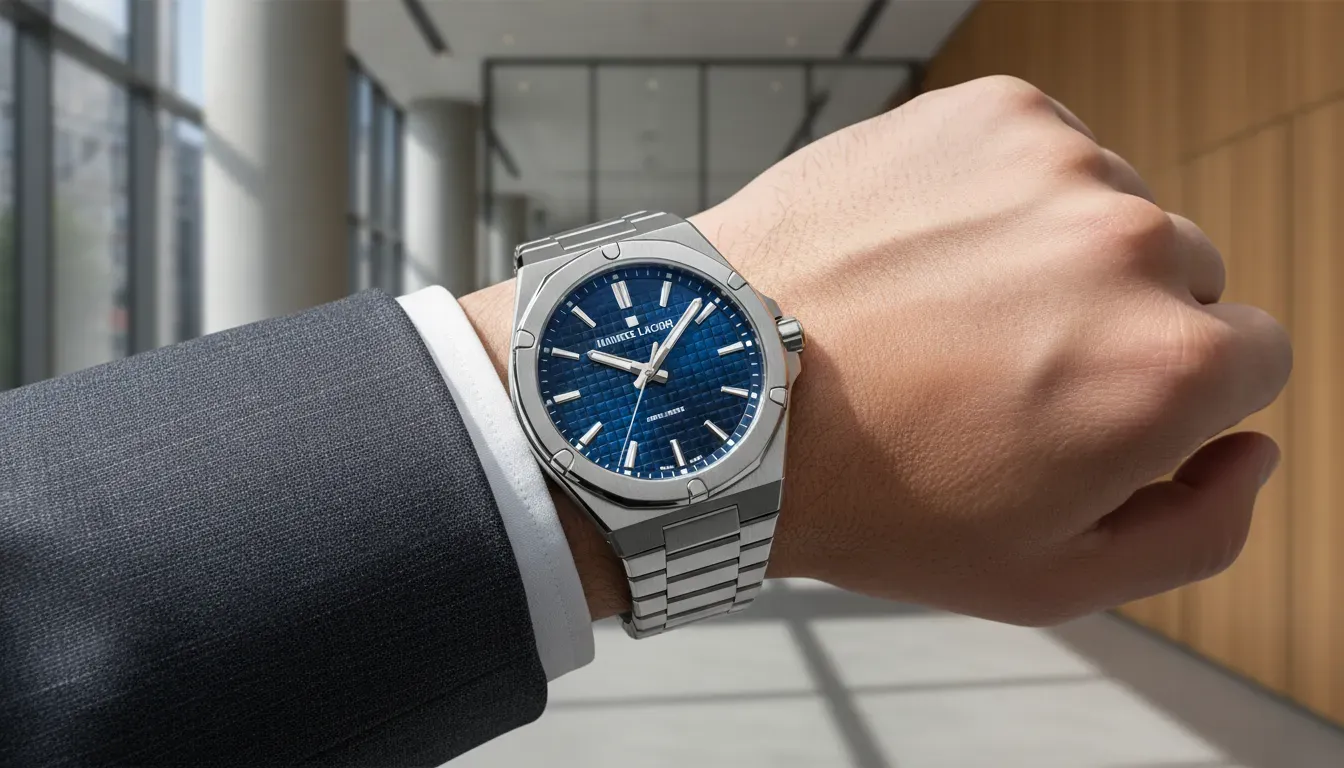
The Aikon is often dismissed by snobs as a derivative design, but that’s a lazy critique. The finishing on the Aikon’s case—specifically the polished claws on the bezel—is sharper than watches costing three times as much. They have managed to capture the “luxury steel sports” aesthetic perfectly.
Beyond the aesthetics, Maurice Lacroix is a legitimate manufacture. They produce complex movements in their Saignelégier facility. They aren’t just casing generic engines; they are innovating. Their “Gravity” movement, which uses silicon components, is tech you usually see in brands starting at $15,000, yet Maurice Lacroix keeps it attainable.
3. Frederique Constant: Accessible Haute Horlogerie
There is a specific mission statement at Frederique Constant: “Let more people enjoy luxury.” While that sounds like marketing fluff, they actually back it up with engineering.
This brand does the impossible. They produce an in-house Perpetual Calendar—one of the most complex mechanisms in watchmaking—for under $10,000. For context, most Swiss perpetual calendars start north of $30,000.
How do they do it? Smart engineering and efficient manufacturing processes. They aren’t cutting corners on the movement; they are just modernizing how it’s built. Their Classics Worldtimer Manufacture is another stunner, offering a function usually reserved for high-flying travelers at a price point that makes sense for the actual working professional.
If you are looking for a dress watch that looks like an heirloom piece from the 1950s but runs with modern precision, check out their Slimline collection.
Frederique Constant Slimline Automatic
4. Oris: The Mechanical Purist
“Real watches for real people.” That’s the slogan, and they mean it. Oris is one of the few Swiss brands that produces only mechanical watches. No quartz. No batteries. If it doesn’t have a spring and gears, Oris won’t touch it.
Located in Hölstein since 1904, Oris has a fiercely loyal cult following, and for good reason. They are independent and obsessed with utility. Their dive watches, specifically the Aquis and the vintage-inspired Divers Sixty-Five, are legendary.
But the real reason they are on this list is the Calibre 400. Oris recently developed this in-house movement which boasts a massive 5-day power reserve and a 10-year warranty. A 10-year warranty is practically unheard of in this industry. It signals a level of confidence in their engineering that puts the big luxury conglomerates to shame.
If you are interested in how accessories define your personal brand, you might want to read our guide on styling essentials for the modern man.
5. Longines: The Sleeping Giant
You might be thinking, “Wait, Longines isn’t underrated, they are everywhere.” You’re right, they have a huge presence. But in terms of horological respect, they are criminally undervalued.
Longines has a history that rivals Omega. They were timing sports events and accompanying aviators like Charles Lindbergh while other brands were still figuring out how to make a waterproof case. Because they fall under the Swatch Group umbrella, they are market-positioned just below Omega, which forces them to keep prices lower.
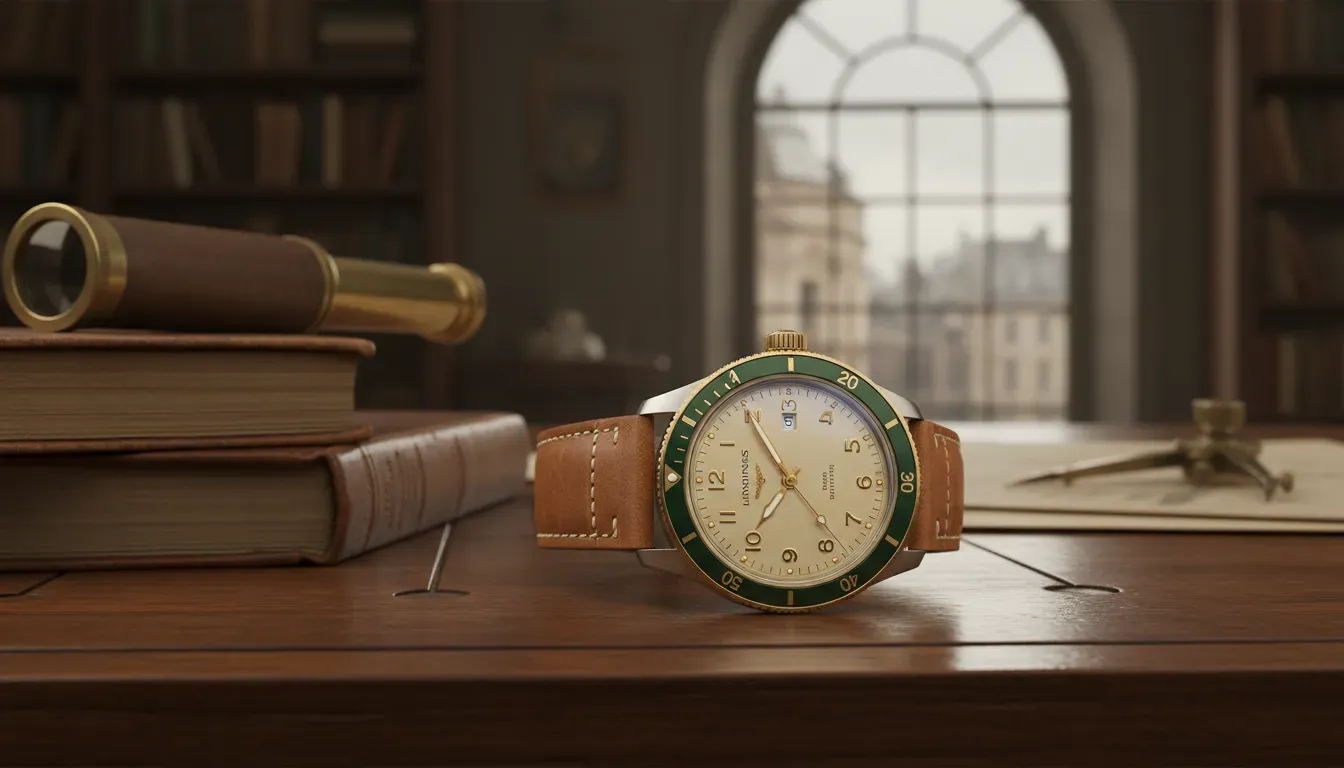
This is great for you. It means you can buy the Longines Spirit or the Master Collection and get top-tier silicon hairspring movements and COSC certification (chronometer accuracy) for a steal. The Spirit Zulu Time is arguably the best GMT watch on the market right now under $4,000, blowing away competitors that cost double.
Don’t let the ubiquity of their mall ads fool you; this is serious watchmaking.
6. Nomos Glashütte: The Bauhaus Darling
Let’s hop across the border from Switzerland to Germany. In the tiny town of Glashütte, some of the world’s best watchmaking happens. While A. Lange & Söhne grabs the headlines with six-figure prices, Nomos is quietly dominating the design game.
Nomos is the epitome of “if you know, you know.” Their aesthetic is strictly Bauhaus: form follows function. Minimalist dials, clean typography, and slim cases.
But don’t mistake the simplicity for a lack of complexity. Nomos makes their own movements in-house, including their own escapement (the Swing System), which is something very few brands can claim. A Nomos Tangente or Club doesn’t look like a flex. It looks like you care about design, architecture, and precision. It is the ultimate “smart person’s watch.”
7. Junghans: Architectural History on Your Wrist
Continuing the German theme, we have Junghans. If you appreciate the mid-century modern aesthetic—think Eames chairs and clean lines—you need a Max Bill.
Max Bill was a legendary architect and designer from the Bauhaus school who designed clocks and watches for Junghans in the roughly 1960s. The brand still produces these designs today, largely unchanged.
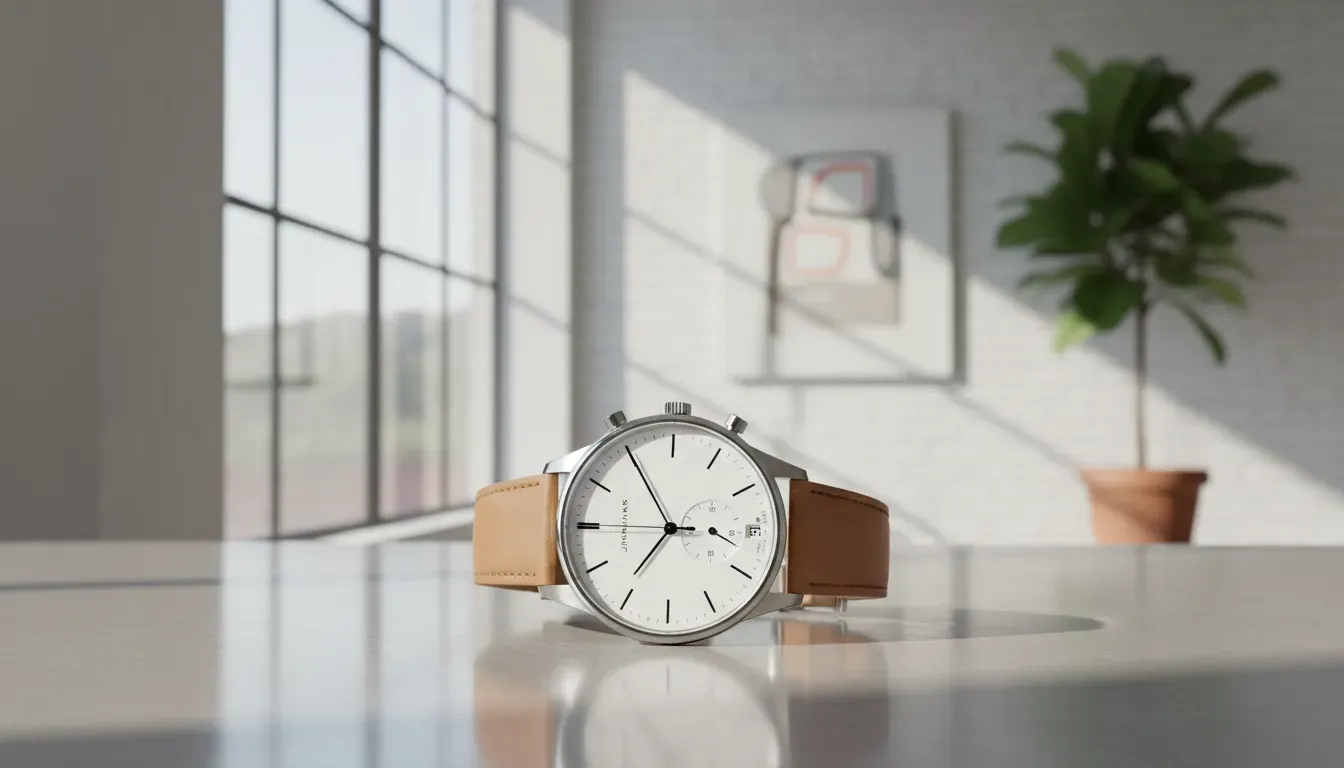
The Junghans Max Bill Chronoscope is a masterclass in dial layout. There is almost no bezel, so the watch is all dial, making it wear beautifully. It’s distinct. It doesn’t look like a dive watch or a racing watch; it looks like a piece of art.
While they do use modified external movements, the value proposition here is the design legacy. You are wearing a piece of history that fits as well with a t-shirt and jeans as it does with a tuxedo.
Why These Brands Matter
Choosing a Raymond Weil or a Nomos over a standard luxury entry-point watch says something about your character. It suggests you value substance over hype.
The luxury market is shifting. We are moving away from “logomania” and toward “quiet luxury”—quality that speaks for itself without shouting. These seven brands are the gatekeepers of that philosophy. They offer the joy of mechanical art, the reliability of centuries of engineering, and the satisfaction of finding a gem that everyone else overlooked.