Luxury Dive Watches: The Ultimate Guide to Premium Divers 2026
The definitive guide to luxury dive watches in 2026. Compare Rolex Submariner, Omega Seamaster, Blancpain Fifty Fathoms, and Tudor Black Bay — specs, investment value, case size guide, and styling tips.

Apr 19, 2026 - Written by: Brahim amzil
Luxury dive watches are high-end, professionally graded aquatic timepieces that combine extreme water resistance (typically 300 meters or more) with premium horological craftsmanship, precious or high-tech materials, and in-house mechanical movements. Originally engineered as essential survival tools for deep-sea explorers in the 1950s, these watches feature unidirectional rotating bezels, highly legible luminescent dials, and ultra-durable sapphire crystals. Today, they are widely recognized as the ultimate versatile status symbol, effortlessly bridging the gap between rigorous underwater utility and sophisticated boardroom elegance.
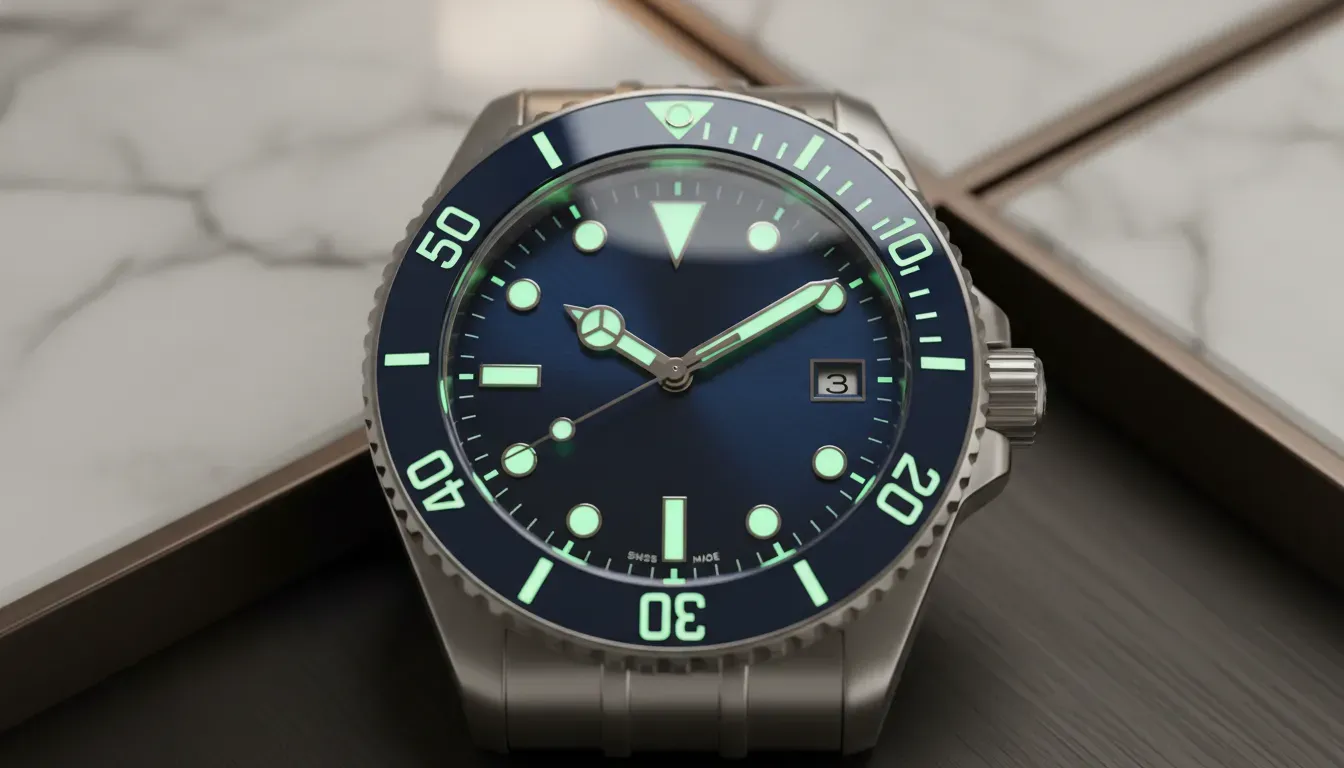
You don’t actually have to be a scuba diver to appreciate the immense appeal of these mechanical marvels. In fact, the vast majority of people wearing a premium diver will never take it deeper than the deep end of a resort swimming pool.
That phenomenon is affectionately known in the watch community as “desk diving.” And there is absolutely zero shame in it.
Wearing a piece of over-engineered maritime history on your wrist sends a specific message. It says you value rugged reliability just as much as you appreciate fine Swiss craftsmanship. You want a watch that can take a beating, survive a torrential downpour, and still look perfectly at home peeking out from the cuff of a tailored tuxedo.
Let’s dive into what actually makes these aquatic timepieces worth their premium price tags, and explore the heavy hitters that dominate the category.
The Anatomy of an Aquatic Masterpiece
What separates a standard sports watch from true luxury dive watches? The distinction lies entirely in the uncompromising engineering. When you are suspended a hundred feet underwater, relying on compressed air to stay alive, your watch isn’t just an accessory. Historically, it was a lifeline.
Modern luxury watchmakers still honor that life-or-death legacy by packing these timepieces with specialized features.
The Unidirectional Rotating Bezel
This is the visual hallmark of the genre. The bezel surrounding the watch dial rotates—but only counter-clockwise. Why? Because divers use it to track how much oxygen they have left in their tanks. If the bezel gets accidentally bumped against a coral reef or the side of a boat, the remaining dive time will only appear shorter, prompting the diver to surface early. If it could rotate both ways, a bump might make the diver think they have more air than they actually do. That is a fatal error.
Today, top-tier brands craft these bezels from proprietary scratch-proof ceramics, liquid metal, or even sapphire, ensuring the watch looks flawless for decades.
Extreme Illumination
Total darkness dominates the ocean depths. A luxury dive watch must feature aggressively bright luminescence. Watchmakers paint the hands, hour markers, and sometimes the bezel numbers with photoluminescent materials like Super-LumiNova or Chromalight. Some avant-garde brands even use tiny, gas-filled tritium tubes that glow independently for decades without needing to be “charged” by sunlight.
The Helium Escape Valve
You will only find this highly specialized piece of hardware on extreme saturation divers, like the legendary Rolex Sea-Dweller or the Omega Planet Ocean. Commercial divers live in pressurized underwater habitats breathing a mixture of helium and oxygen. Helium molecules are incredibly tiny—so tiny they can slip right past the watch’s gaskets and into the case. When the diver ascends in a decompression chamber, that trapped helium expands. Without a release valve, the pressure would violently blow the crystal right off the watch face.
You might never need a helium escape valve. But knowing your watch is engineered to survive the most hostile environments on earth? That is a massive part of the psychological appeal.
Iconic Titans Shaping the Deep
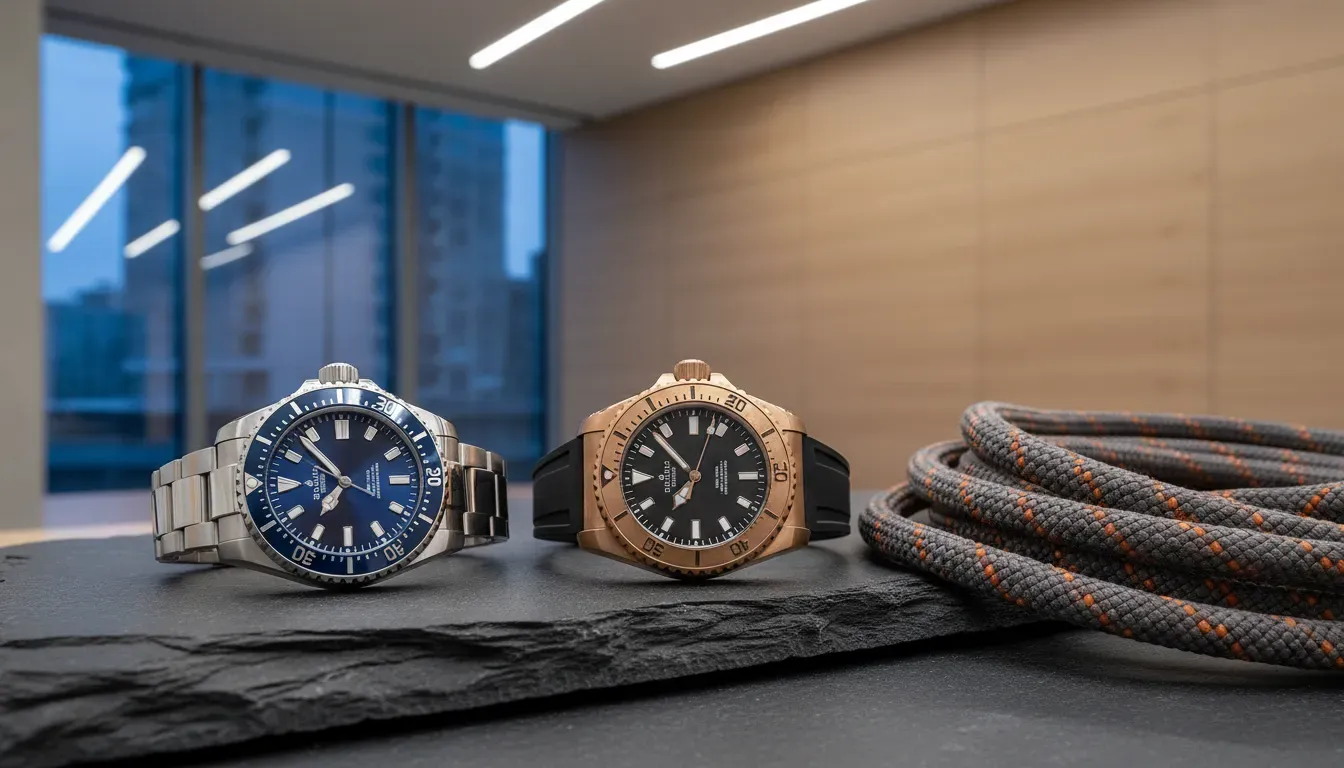
If you are looking to invest in luxury dive watches, you cannot ignore the pioneers. A few distinct brands essentially wrote the rulebook for what an underwater timepiece should be.
The Original: Blancpain Fifty Fathoms
Most people assume Rolex invented the dive watch. They didn’t. Blancpain debuted the Fifty Fathoms in 1953, working directly with the French Navy’s elite combat divers. It introduced the lockable timing bezel and the high-contrast black dial with massive luminous markers. The modern iterations of the Fifty Fathoms are stunningly luxurious, often featuring intricately decorated movements visible through exhibition casebacks and incredibly domed sapphire bezels that catch the light like polished obsidian.
The Undisputed King: Rolex Submariner
Introduced just months after the Fifty Fathoms, the Submariner is arguably the most recognizable watch in human history. It is the archetype. The standard by which every other dive watch is judged. Rolex transitioned the diver from a raw military tool into a sophisticated luxury item. With its proprietary Oystersteel (which is uniquely resistant to corrosion) and ultra-reliable in-house caliber, the Submariner holds its value better than almost any other watch on the market.
Want to know more about keeping a piece like this running perfectly? Check out our guide on proper mechanical watch maintenance to protect your investment.
The Spy’s Companion: Omega Seamaster Diver 300M
Omega’s relationship with the ocean dates back decades, but the Seamaster Diver 300M exploded into pop culture consciousness in 1995 when it became the official watch of a certain famous British secret agent. Instantly recognizable by its laser-engraved wave dial and skeletonized hands, the modern Seamaster is a technical powerhouse. It features a Master Chronometer movement that is practically impervious to magnetic fields.
Standout Amazon Picks for Your Collection
Building out your collection means finding the right balance of heritage, aesthetics, and pure wrist presence. While hunting down vintage references at auction is a thrill, you can acquire some phenomenal modern pieces directly online.
Here are three exceptional options that deliver immense value and undeniable prestige.
1. The Modern Classic If you want the exact blend of nautical heritage and cutting-edge anti-magnetic technology, you cannot go wrong with the Omega Seamaster Diver 300M. It wears beautifully on both the steel bracelet or the incredibly comfortable integrated rubber strap. The ceramic wave dial plays with natural light in a way that is endlessly captivating.
2. The Accessible Swiss Powerhouse Stepping into the world of luxury dive watches doesn’t always require a second mortgage. The Tissot Seastar 1000 Powermatic 80 offers a tremendous entry point into Swiss automatic divers. With an impressive 80-hour power reserve, a ceramic bezel, and a robust build, it delivers luxury-tier specifications at a highly approachable price point.
3. The Sharp-Edged Contender For those who prefer angular, aggressive styling over traditional round indices, the Tag Heuer Aquaracer Professional 300 is a brilliant choice. It features a distinctive 12-sided bezel, a striking sunray dial, and a micro-adjusting clasp that ensures the perfect fit on your wrist, even as your arm swells slightly during the day.
The Art of Desk Diving: Styling Your Timepiece
One of the greatest strengths of a luxury diver is its sheer versatility. Very few timepieces can seamlessly transition from a neoprene wetsuit to a bespoke wool suit.
But there are some unspoken rules to styling these watches.
When wearing a diver with formalwear, stick to a metal bracelet or a dark, high-quality leather strap. Leave the bright orange rubber diving straps for the weekend. The watch should slip easily under your shirt cuff. If the watch is so thick that it snags your sleeve—often an issue with extreme deep-sea models—it might be too casual for black-tie attire.
For weekend wear? The sky is the limit. Swap the heavy steel bracelet out for a nylon NATO strap. Originally designed for the British Ministry of Defence, NATO straps add a rugged, tactical edge to any dive watch. They are also incredibly practical; if one of your spring bars breaks during an active weekend, the strap’s design ensures the watch stays securely attached to your wrist.
If you find yourself frequently swapping straps and letting your automatic watches sit for a few days, you might want to look into high-end luxury watch winders to keep your movements ticking and your date wheels properly aligned.

Are They a Smart Investment?
This is the question every new collector eventually asks. Dropping five figures on a mechanical object that essentially does the exact same job as your smartphone requires justification.
Let’s look at the reality of watch investing.
Certain luxury dive watches—specifically steel sports models from Rolex, Patek Philippe, and Audemars Piguet—have historically appreciated in value or held their retail price incredibly well on the secondary market. A well-maintained vintage Submariner or a rare Tudor Marine Nationale can fetch staggering sums at auction.
However, looking at watches strictly as financial assets is a dangerous game. The market fluctuates. Trends change. What is red-hot today might cool off tomorrow.
You should buy a luxury dive watch because you genuinely love it. Buy it because you appreciate the micro-engineering required to build a tiny engine out of springs and gears that powers itself entirely through the kinetic movement of your arm. Buy it because you want an heirloom.
A great dive watch is something you can wear every single day of your life, scuffing up the clasp on your desk, taking it on vacations, swimming in the ocean with it, and eventually passing it down to the next generation with all your accumulated stories attached to it.
Navigating Case Sizes and Ergonomics
Before you pull the trigger on a new aquatic timepiece, you need to think about proportions. Dive watches run the gamut from vintage-inspired 37mm cases to massive 47mm beasts designed to wrap around thick diving suits.
A watch that is too large will look awkward and feel uncomfortably heavy. The key metric to watch isn’t just the case diameter, but the “lug-to-lug” distance. This is the measurement from the top tips of the watch to the bottom tips. If the lug-to-lug distance is wider than your actual wrist, the watch will overhang, creating an unflattering “dinner plate” effect.
If you have smaller wrists, look toward vintage reissues. Brands like Tudor and Oris have found massive success releasing smaller, slimmer dive watches that echo the more modest proportions of the 1960s. The Tudor Black Bay 54, for instance, sits at a beautifully compact 37mm, offering all the ruggedness of a modern diver with a highly refined, tailored fit.
Final Thoughts Before Taking the Plunge
The world of horology is vast, deep, and endlessly fascinating. But no category of watches commands quite as much respect and universal admiration as the diver.
They are the ultimate “go anywhere, do anything” companions. They laugh at rainstorms, shrug off accidental drops, and look exceptionally sharp while doing it. Whether you are tracking a decompression stop in the Red Sea or just timing the steaks on your backyard grill, luxury dive watches offer a tactile, mechanical joy that digital devices simply cannot replicate.
Find the brand with a history that speaks to you. Try on different case sizes. Fall in love with a dial color. Once you strap a beautifully engineered dive watch to your wrist, you will understand exactly why this specific style of watchmaking has captivated the world for over seventy years.