Navigating the Grey Market vs. Authorized Dealers
A deep dive into the risks, rewards, and critical differences between buying luxury goods from grey market sellers versus official authorized boutiques.

Feb 13, 2026 - Written by: Brahim amzil
Navigating the Grey Market vs. Authorized Dealers
It starts with a number. Specifically, the difference between the number printed on the hangtag in a velvet-roped boutique and the number flashing on your screen from a third-party website.
The difference can be staggering. Twenty percent. Thirty percent. Sometimes, on certain high-horology pieces or in-demand luxury leather goods, the gap widens to nearly half the retail price. It’s enough to make even the most purist collector pause and do the mental math.
But in the world of luxury goods—whether we are talking about Swiss watches, designer handbags, or high-end electronics—if the price seems too good to be true, the market is usually hiding a caveat. This is the realm of the Grey Market. It isn’t illegal, but it certainly isn’t the red-carpet experience of an Authorized Dealer (AD). It’s a parallel economy, a shadowy reflection of the retail world where the rules of engagement change entirely.
Making the right choice isn’t just about saving money; it’s about understanding provenance, risk tolerance, and what you actually value in a purchase. Are you buying the product, or are you buying the peace of mind that comes with it?
The Authorized Dealer: The Price of Legitimacy
To understand the grey market, you first have to understand the standard model. Authorized Dealers (ADs) are retailers who have signed strict contracts with manufacturers (brands like Rolex, Omega, Hermès, or Nikon). They are the anointed ones.
When you walk into an AD, you are paying for more than the object. You are funding the overhead. The prime real estate, the staff salaries, the marketing displays, and yes, that complimentary glass of champagne they offer while you try on a wrist-watch.
The “Paper” Trail
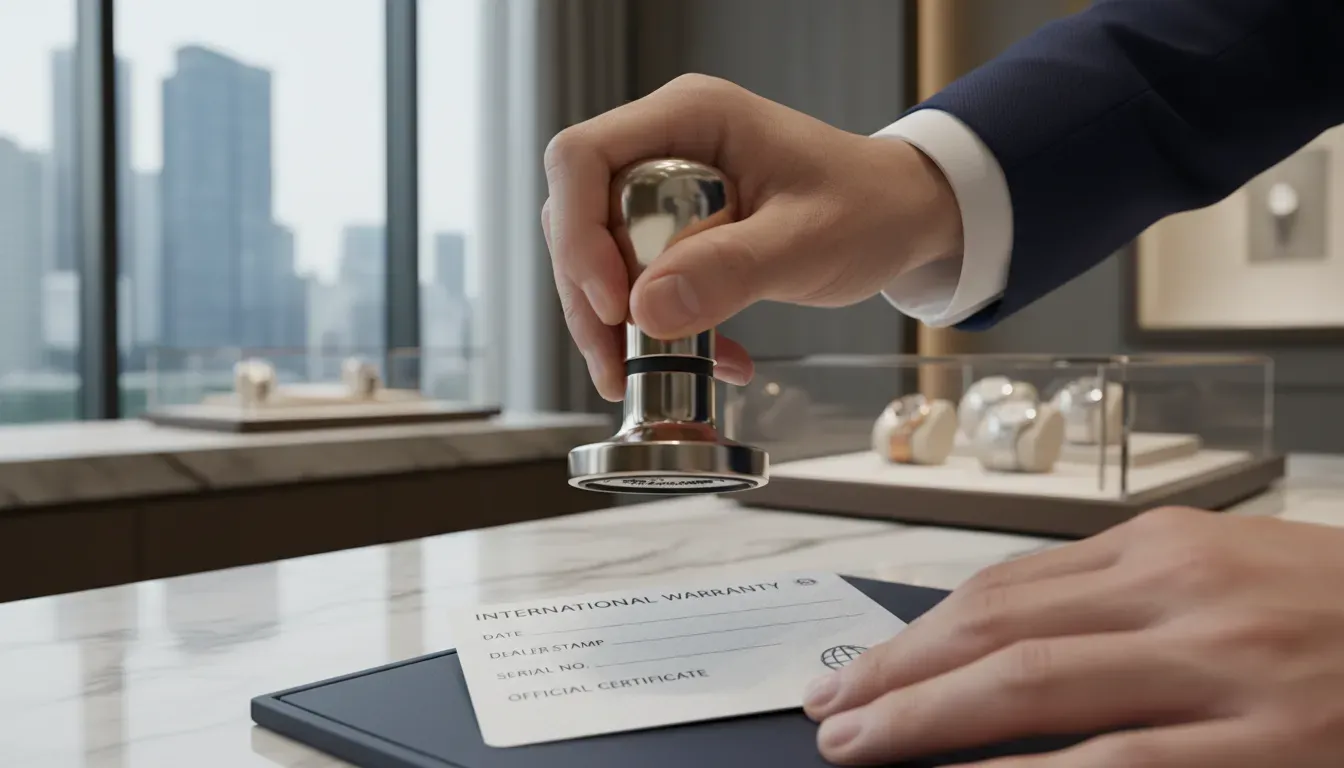
The single most valuable asset an AD provides, aside from the product itself, is the stamped warranty card.
When you buy from an authorized source, the manufacturer recognizes you as the original owner. If the movement in your mechanical watch fails six months later, or the stitching on a bag undoes itself, the brand fixes it. No questions asked. You are in the system.
For those building a serious collection, this “paper” is crucial. It establishes a clear chain of custody—provenance—which is vital for resale value later.
The Relationship Game
There is a psychological component here, too. In the current landscape of hyper-hyped luxury goods, money alone often isn’t enough to buy what you want. You can’t just walk in and buy a steel sports watch from certain Swiss giants. You need a “relationship.”
Spending money at an AD builds a profile. Buying the less desirable models today might unlock the allocation for a “unicorn” piece tomorrow. It’s a game, certainly, and one that frustrates many buyers, but it is the only way to get certain items at retail price.
Defining the Grey Market: Murky Waters
So, what exactly is the grey market?
It’s important to distinguish “grey” from “black.” The black market deals in stolen or counterfeit goods. The grey market deals in genuine goods sold through unauthorized channels.
These products are real. They were manufactured in the same Geneva factories or Italian workshops as the ones in the boutique. But somewhere along the line, they fell off the official truck—metaphorically speaking.
Usually, it works like this: An Authorized Dealer has sales quotas to hit. If they don’t sell enough units, the brand might strip their authorized status. So, when they have inventory that is gathering dust (usually less popular models), they quietly sell it out the back door to a grey market dealer at a steep discount just to clear the books.
The grey market dealer then sells it to you. The price is lower because the grey dealer doesn’t have a marble-floored showroom or strict pricing rules enforced by the brand.
The Warranty Void
Here is the catch. The biggest one.
Because the grey market seller is not authorized, the manufacturer usually will not honor the warranty.
When you buy grey, you often receive the product with the warranty card missing, blank, or stamped by a retailer that the brand doesn’t recognize. If the item breaks, you are on your own. Many reputable grey market sites offer their own in-house warranty to compensate for this, but let’s be honest: do you want a factory-trained technician fixing your $8,000 timepiece, or a generalist mechanic hired by a warehouse website?
For high-maintenance items, having the right tools for basic upkeep can save you a trip to a questionable repair shop.
The Risk Analysis: What Could Go Wrong?
If the discount is 40%, you might not care about the warranty. You could pay for a service out of pocket and still come out ahead. This is the logic of the “smart” grey market buyer. However, the risks go beyond just the warranty.
1. Serial Number Tampering
Some grey market goods have their serial numbers removed. This is done to protect the original Authorized Dealer who leaked the product. If the brand finds out which AD sold stock to the grey market, that AD loses their license. To prevent tracing, serials are sometimes polished off.
Never buy an item without a serial number. It makes insurance impossible and resale a nightmare. It effectively marks the item as “damaged goods” in the eyes of collectors.
2. The “Shop Worn” Factor
An item bought from a grey dealer might be “new,” but it hasn’t necessarily been living in a vacuum sealed chamber. It might have been a display model at five different stores before finally being liquidated. It could have handling marks, dried-up lubricants (in the case of mechanics), or minor cosmetic imperfections that wouldn’t pass muster at a boutique.
3. The “Frankenstein” Product
In rare, darker corners of the grey market, you encounter products that are part authentic, part aftermarket. A watch might be real, but the bracelet was swapped for a generic one. A camera body is genuine, but the battery and charger in the box are cheap knock-offs.
Verifying authenticity is your responsibility here. If you are buying pre-owned or grey market, having magnification tools to inspect the finer details—like dial printing or stitching—is non-negotiable.
When to Go Grey: The Sweet Spot
Despite the doom and gloom of the risks above, the grey market is a thriving multi-billion dollar industry for a reason. For the savvy buyer, it is arguably the better place to shop for specific categories.
The “Soft” Brands
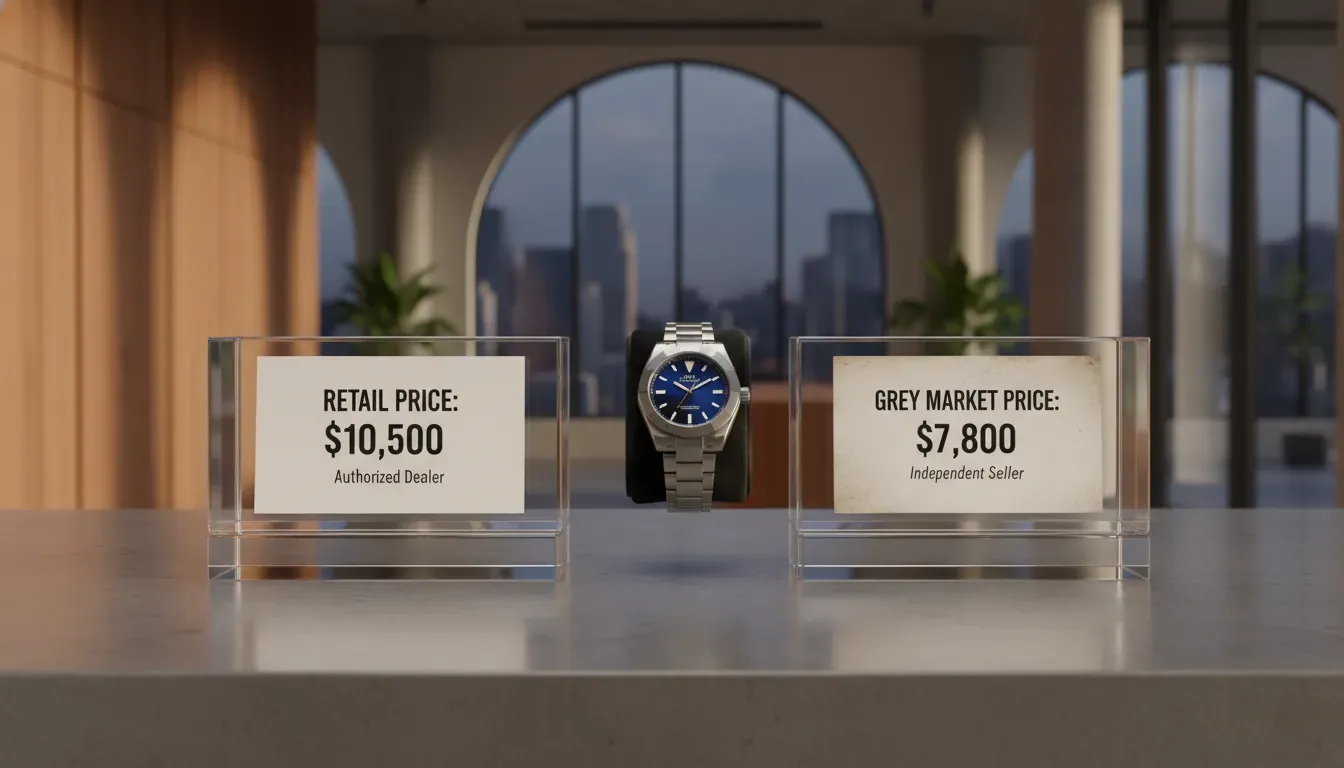
If you are looking for brands that historically depreciate the moment they leave the store, the grey market is your friend. Why pay $10,000 for a watch that trades for $6,000 the next day? Buying grey allows you to let the original dealer take the depreciation hit. You get a brand new item at the “real” market price.
Discontinued Models
Sometimes, the authorized channel simply can’t help you. If a model was discontinued three years ago, the boutique won’t have it. The grey market (and the pre-owned market) becomes the only game in town.
For those navigating these waters, understanding how to maintain your collection without manufacturer support is key. You might find our guide on Long Term Storage for Valuables useful for preserving condition.
When to Stick with the Boutique
There are times when the discount simply isn’t worth the headache, or where the grey market is actually more expensive.
The Hype Tax
Ironically, for the most desirable items on the planet (think steel Rolex Daytonas or Hermes Birkins), the grey market price is higher than retail.
Because you can’t buy these items at an AD without a massive prior spend history, “flippers” buy them and sell them on the grey market at a 200-300% markup. In this case, going grey isn’t about saving money; it’s about paying a premium to skip the line.
If you have the patience and the social engineering skills, building a relationship with an AD is the better financial move here. It safeguards your investment.
Complex Mechanics
The more complex the item, the more you need the manufacturer’s backing. If you are buying a perpetual calendar watch or a piece of tech with intricate proprietary parts, the risk of a malfunction is higher. Independent repair shops may not even have access to the parts required to fix these items. In these cases, the AD premium is essentially an insurance policy.
Protecting these investments at home is just as critical as buying them from the right source. See our insights on Home Organization for Collectors to keep your assets safe.
Vetting the Seller: “Buy the Seller, Not the Watch”
This is the golden rule of the industry. If you decide to step outside the authorized network, you must vet the merchant with forensic intensity.
- Check the Age of the Domain: Is this a pop-up site, or have they been around for 15 years?
- Forums are Your Friend: Go to enthusiast forums (WatchUSeek, PurseForum, Reddit). Search the seller’s name. If someone had a bad experience, they have undoubtedly complained about it online.
- Return Policies: A legitimate grey market dealer offers a solid return window. If the sale is “Final,” run away. You need time to inspect the goods and verify them.
- Physical Presence: Does the dealer have a brick-and-mortar location? Even if you are buying online, knowing they have a physical address adds a layer of accountability.
If you are buying multiple timepieces or accessories, how you store them during transit or at home matters immensely. Flimsy storage can lead to scratches that devalue your purchase instantly.
The Verdict
The battle between the Grey Market and Authorized Dealers isn’t about good versus evil. It’s about convenience versus security, and price versus experience.
The Authorized Dealer offers a sterile, safe, and premium experience. You pay full price, but you sleep soundly knowing your purchase is backed by the brand. You are building a history that might pay dividends in future allocations.
The Grey Market offers the thrill of the hunt and the satisfaction of a deal. It strips away the marketing fluff and sells you the raw product at a market-corrected price. But it requires you to be educated, vigilant, and willing to accept that if things break, the path to repair might be bumpy.

Before you pull out the credit card, ask yourself: Am I buying this to keep forever, or to flip? Do I care about the boutique experience, or do I just want the item on my wrist or in my closet?
If you are buying a rugged, standard-production item with a robust movement or simple construction, the grey market savings are often too good to ignore. But for that grail piece—the one you plan to hand down to the next generation—there is something to be said for having your name on the papers, stamped by the house that built it.
For more tips on managing your luxury acquisitions, check out our article on Organizing High-Value Closets.
Ultimately, the market is only as “grey” as your understanding of it. Illuminate the risks, do your homework, and you can navigate the divide with confidence.