Nomos Glashütte: A Case Study in German Design
Discover how Nomos Glashütte blends Bauhaus aesthetics with rigorous German engineering to create a distinct, value-driven alternative to Swiss luxury.

Feb 14, 2026 - Written by: Brahim amzil
Nomos Glashütte represents the perfect synthesis of the Deutscher Werkbund’s functionalist design principles and the rigorous horological standards of Glashütte, Saxony, offering a unique alternative to Swiss tradition by prioritizing minimalist aesthetics and independent, in-house manufacturing. While Swiss horology often leans into ornamentation, heritage prestige, and complexity for complexity’s sake, Nomos distinguishes itself through “form follows function”—delivering high-precision mechanical movements (including their proprietary Swing System) wrapped in unpretentious, intellectually driven designs that remain accessible without sacrificing exclusivity.
The Glashütte Standard: More Than Just a Zip Code
When you see “Glashütte” on a dial, it isn’t just a nod to a location; it is a seal of quality protected by law. Similar to how Champagne must come from a specific region in France, a watch bearing the name Glashütte must satisfy strict requirements. At least 50% of the movement’s value must be generated locally in this tiny Saxon town.
Nomos doesn’t just meet this requirement; they obliterate it. They produce up to 95% of their movements in-house. This is where the German approach diverges sharply from the entry-level Swiss market, which often relies on generic, mass-produced calibers from giants like ETA or Sellita.
The Independence of the Swing System
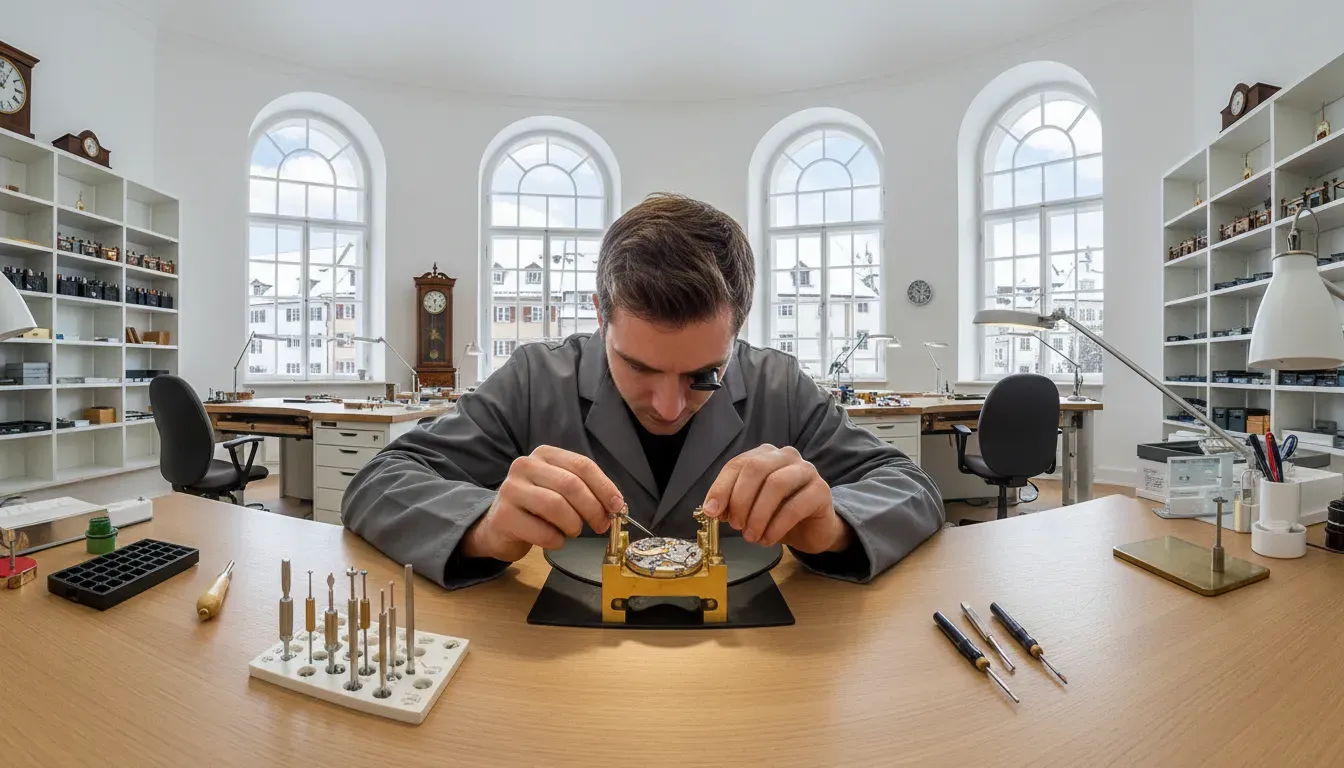
For decades, the watch industry was held hostage by the supply chains of a few Swiss conglomerates. The escapement—the heart of the watch that regulates time—is notoriously difficult to manufacture. Most brands buy them. Nomos decided to build their own.
They poured over 11 million Euros and years of R&D into creating the Nomos Swing System. This proprietary escapement broke the monopoly. It was a declaration of independence. When you strap a Nomos to your wrist, you aren’t just wearing a pretty face; you are wearing a piece of mechanical defiance. It ensures that the brand controls its own destiny, quality, and pricing structure, insulating them from the whims of Swiss suppliers.
If you are interested in the deeper mechanics of how these movements function compared to their Swiss counterparts, you might enjoy reading about The Mechanics of Luxury.
Bauhaus and the Deutscher Werkbund: Design with Purpose
People often lazily categorize Nomos as “Bauhaus.” While not incorrect, it’s a simplification. Nomos is deeply rooted in the Deutscher Werkbund, the precursor to the Bauhaus movement. The philosophy is simple yet difficult to execute: machine production should be married with artistic craftsmanship.
The Swiss tradition often equates luxury with excess—guilloché dials, applied gold indices, and heavy fluting. German design, specifically the Nomos aesthetic, equates luxury with clarity.
The Tangente: A Masterclass in Typography
Take a look at the Tangente, the brand’s icon. It hasn’t changed much in thirty years because it doesn’t need to. The typography is the star. The numerals are linear, sharp, and spaced with architectural precision. The hands are thin, tempered blue steel, providing high contrast against a galvanized silver-plated dial.
There is no clutter. No extraneous text. The watch tells you the time, and perhaps the date, and that is it. It respects your intelligence. It assumes you don’t need a watch to scream for attention to validate your status. This creates a “burst” in the visual experience—a moment of calm in a chaotic world.
For those looking to maintain the pristine condition of such polished steel cases, a high-quality maintenance kit is essential.
Bergeon 7812 Professional Grade Watch Service Kit
A Unique Alternative to Swiss Tradition
Why choose German engineering over Swiss heritage? It usually comes down to value and distinctiveness.
Swiss watches, particularly from the “Holy Trinity” or the massive marketing machine of Rolex, carry a premium for the brand name. You are paying for the ambassadors, the Formula 1 sponsorships, and centuries of accumulated prestige. That is fine—it’s a valid market.
However, Nomos offers an alternative for the “educated consumer.” Because they spend less on global marketing blitzes and more on production efficiency, the price-to-value ratio is staggering. You are getting an in-house movement, finished with Glashütte striping and perlage, often for under $3,000. In the Swiss world, an in-house manufacture movement at that price point is a rarity, bordering on a myth.
The Color Palette of Modern Germany
Another divergence is color. Swiss tradition is often conservative—black, white, silver, and blue. Nomos, perhaps inspired by the vibrant creativity of Berlin (where their design studio, Berlinerblau, is located), plays with color in a way that feels fresh yet mature.
They utilize “midnight blue,” “autobahn grey,” and pops of neon orange or red on the seconds hands. It’s playful. It signals that while the engineering is serious, the wearer doesn’t take themselves too seriously.

The Human Element in Industrial Design
We often think of German engineering as cold or robotic. “Vorsprung durch Technik” and all that. But Nomos feels incredibly warm. This comes from the human scale of the company. It’s still independent. The designs, while drawn on computers, are conceptualized by artists who understand the curvature of a wrist.
The lugs on a Nomos, for instance, are usually long and angled. They bridge the gap between the circular case and the strap, allowing the watch to hug the wrist. It’s an ergonomic consideration that makes the watch disappear until you need it.
To truly appreciate the history of this design philosophy, one must look at the broader context of timekeeping history.
The Watch Book: Compendium by Gisbert L. Brunner
Why This Matters for the Collector
If you are building a collection, redundancy is the enemy. If you own a Submariner, a Speedmaster, and a Black Bay, you have three incredibly capable, steel, Swiss sports watches. They occupy the same mental space.
Adding a Nomos changes the dynamic. It is the dress watch that works with jeans. It is the conversation starter that doesn’t shout. It represents a different geographical and philosophical approach to time.
Collectors often talk about the “exit watch”—the one watch to rule them all. Nomos rarely claims to be an exit watch. Instead, it is the “daily driver” for the creative class. It’s for the architect, the writer, the developer—people who build things.
Strap Culture
Another aspect where Nomos shines is their shell cordovan straps. Sourced from Horween Leather Co. in Chicago, these straps are incredibly durable and comfortable. Unlike the alligator leather favored by the Swiss, shell cordovan is understated. It doesn’t crack; it ripples. It ages with you.
If you want to experiment with different looks on your German timepiece, high-quality leather is non-negotiable.
Hirsch James Performance Leather Watch Strap
The Verdict: Substance Over Status
Nomos Glashütte forces us to ask what we really want from a luxury object. Do we want the recognition of others, or do we want the satisfaction of knowing we own a superior machine?
The Swiss machine is built on emotion and history. The German machine, as exemplified by Nomos, is built on logic and lifestyle. By adhering to the Deutscher Werkbund principles, Nomos ensures that their watches are not just jewelry, but functional tools for modern living.
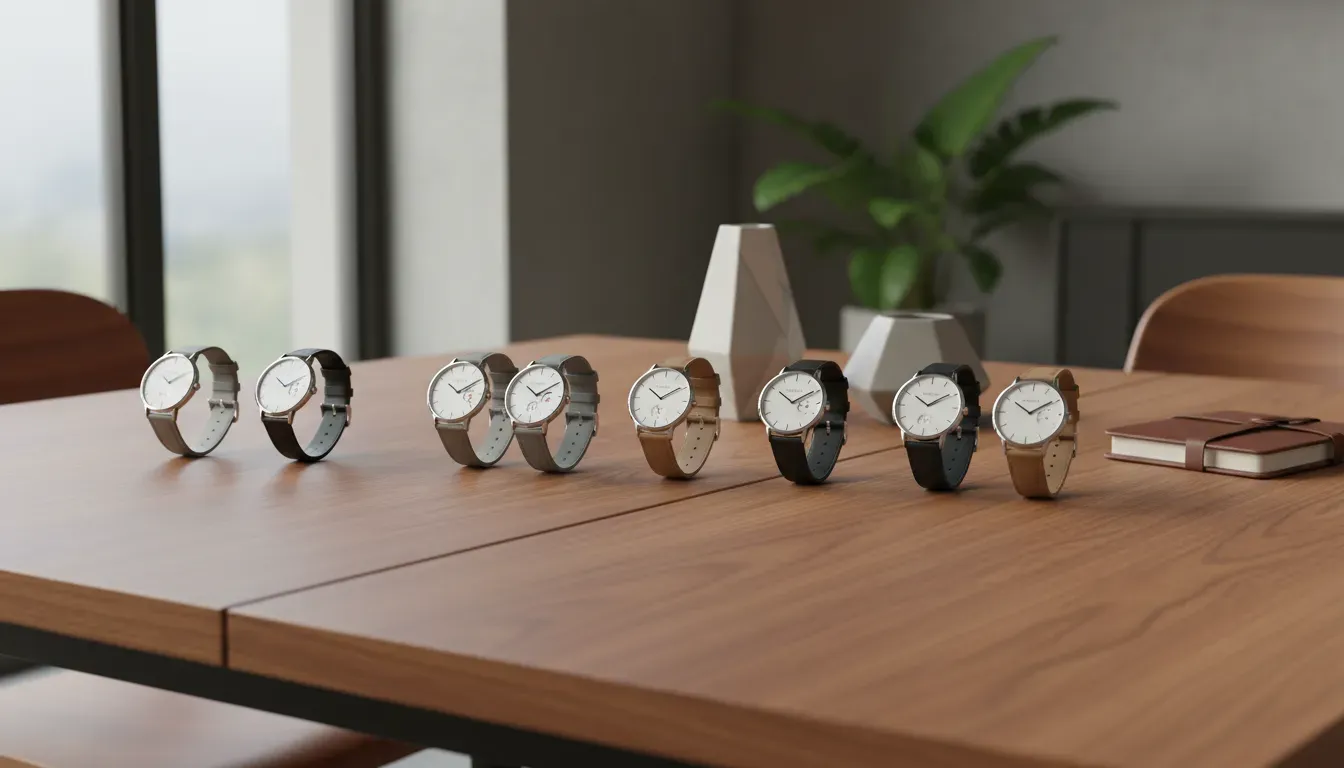
They have managed to make “Made in Germany” mean something specific in the watch world: uncompromised quality, distinct design, and honest pricing. In a market flooded with hype, Nomos remains a bastion of sanity.
For more insights into how design influences lifestyle, check out our deep dive on Minimalism in Modern Living.
The choice isn’t necessarily about rejecting the Swiss. It’s about widening the aperture. It’s about recognizing that great watchmaking speaks German, too.