Sapphire vs. Mineral Crystal: Why It Matters for Your Watch
A deep dive into watch glass: discover the technical differences between sapphire and mineral crystal, and which material suits your lifestyle best.

Feb 14, 2026 - Written by: Brahim amzil
Sapphire vs. Mineral Crystal: Why It Matters for Your Watch
Sapphire crystal is the superior choice for optical clarity and scratch resistance, boasting a rating of 9 on the Mohs hardness scale—second only to diamond—while mineral crystal is essentially heat-tempered glass with a hardness rating of roughly 5 to 6. This distinction is critical: sapphire ensures your watch face remains pristine and readable for decades, virtually immune to everyday abrasion. Mineral crystal, while significantly cheaper and more impact-resistant due to its flexibility, will inevitably accumulate unsightly scratches and “haze” over time. If longevity and aesthetics are your priority, sapphire is the investment standard; if you need a “beater” watch that can survive a hammer blow without shattering, mineral glass holds the tactical advantage.
The Invisible Shield: Understanding Watch Crystals
When you look at your wrist to check the time, you aren’t actually looking at the dial. You’re looking through a protective barrier. In the horological world, this transparent cover is known as the “crystal.”
It seems like a mundane component. It’s just the window, right? But ask any collector who has grazed their wrist against a brick wall or a metal door frame, and they will tell you: the material of that window changes everything. It dictates how the light hits the dial, how the watch ages, and ultimately, how much money you’ll spend on maintenance.
We are going to break down the technical manufacturing processes, the optical physics, and the brutal reality of daily wear that separates the two industry giants: Synthetic Sapphire and Mineral Glass.
Mineral Crystal: The Industry Workhorse
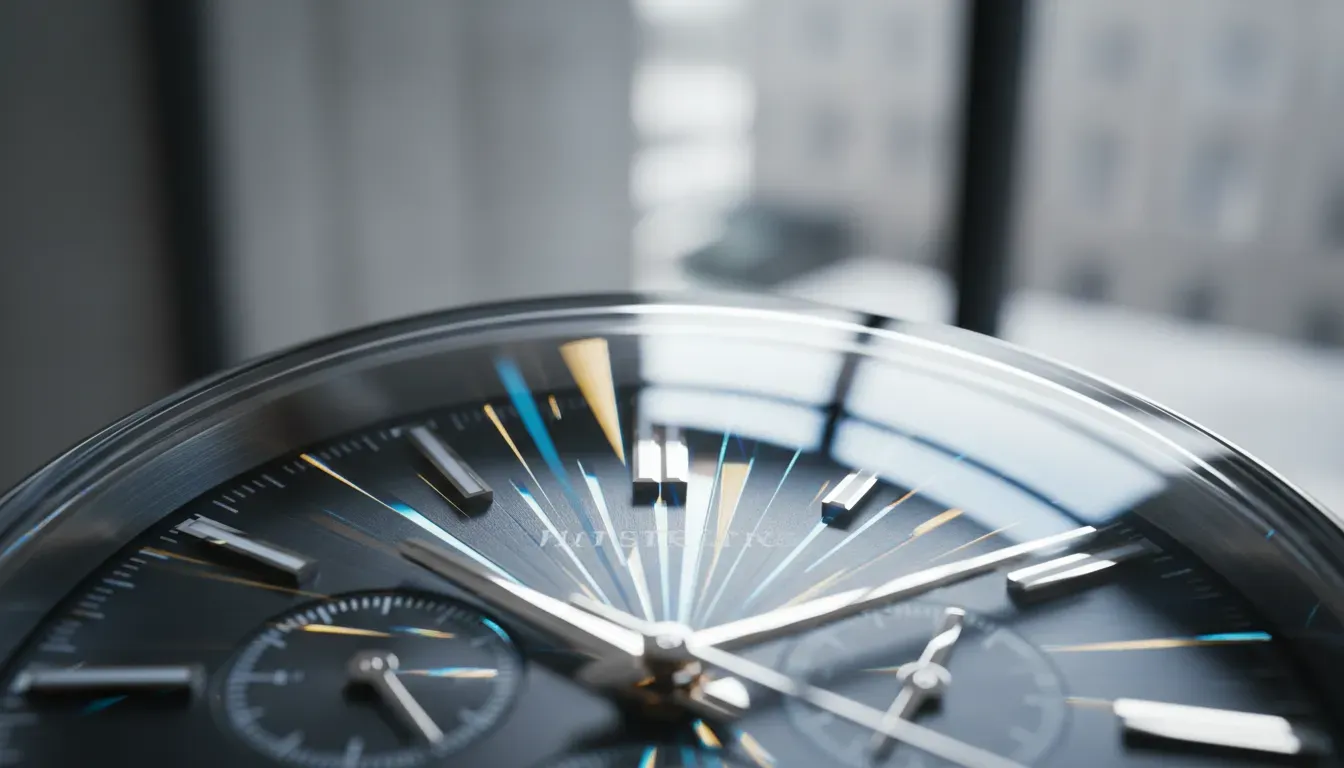
Most entry-level to mid-range watches you encounter—from fashion brands to reliable daily drivers—utilize mineral crystal. If you’ve ever owned a standard department store watch, you’ve likely looked through mineral glass.
The Manufacturing Physics
Mineral crystal is not rare earth magic. It is glass. Specifically, it is silica-based glass that has undergone a tempering process. By heating the glass to extreme temperatures and then cooling it rapidly, manufacturers induce surface compression.
Think of it like the side windows of your car. This tempering process makes the material significantly tougher than standard window pane glass. It creates a structure that is less likely to splinter into dangerous shards if it breaks.
The “Flex” Factor
Here is where mineral crystal actually beats its expensive luxury counterpart. Because glass has a slightly more chaotic atomic structure compared to the rigid lattice of sapphire, it has “give.”
If you drop a mineral crystal watch on a concrete floor, the glass can absorb some of the shock. It flexes microscopically. This flexibility makes it surprisingly resistant to shattering. For this reason, some intense tactical watches still prefer hardened mineral glass. It might get ugly with scratches, but it stays in one piece.
The Scars of Time
The downside? It is soft. On the Mohs scale of mineral hardness, it sits around a 5 or 6. For context, hardened steel (like a knife blade or a file) is also around a 6.5 or 7. Dust contains silica (quartz), which is a 7.
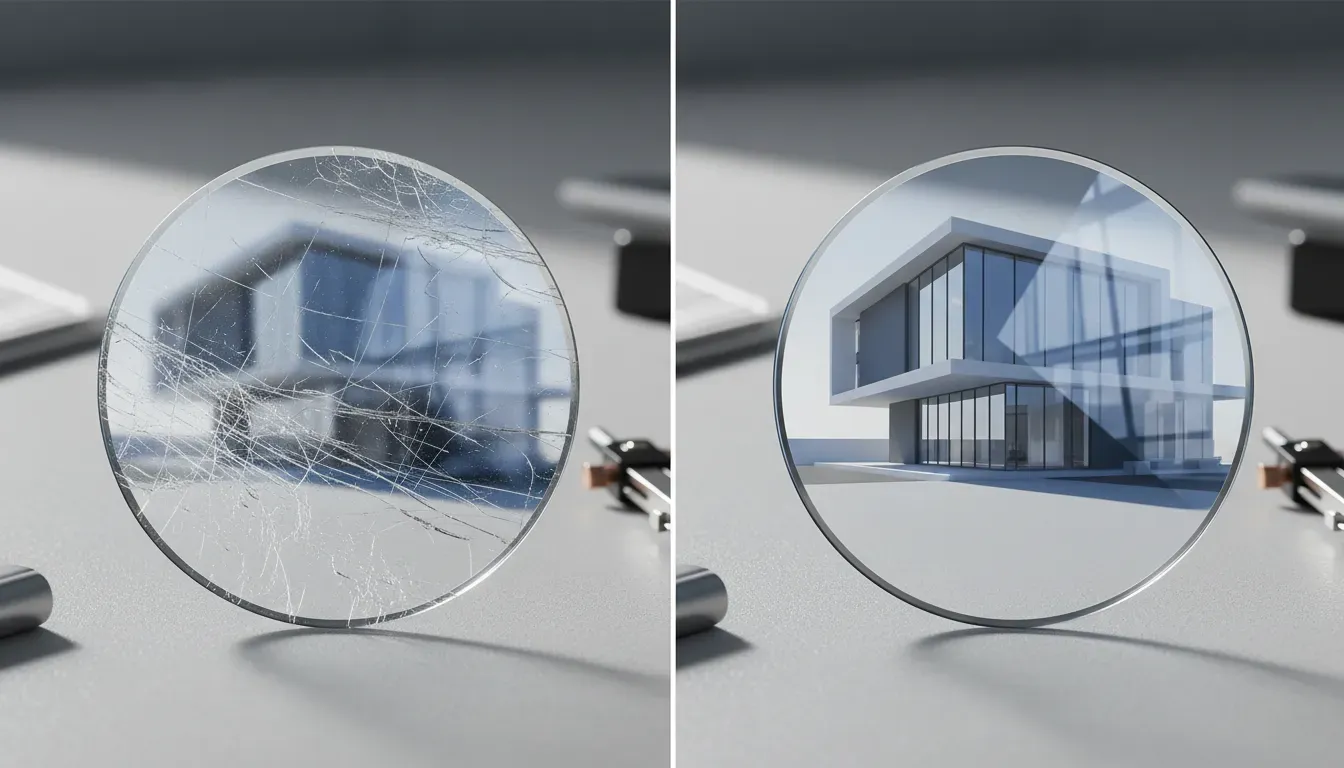
This means that simply wiping your shirt sleeve across a dusty mineral crystal can create micro-abrasions. Over a year or two, these micro-scratches create a cloudy haze that dulls the dial underneath.
If you are looking for a reliable, classic example of a watch that utilizes proprietary hardened mineral glass (often called Hardlex), the Seiko 5 Sports Automatic is a legendary entry point. It’s tough, affordable, and gets the job done.
Synthetic Sapphire: The Gold Standard
When you step into the world of luxury—Rolex, Omega, Patek Philippe, and increasingly, high-value microbrands—sapphire is the non-negotiable standard. But don’t let the name fool you. We aren’t talking about natural gemstones mined from the earth.
How It’s Made: The Verneuil Process
The sapphire on your watch is synthetic corundum (aluminum oxide, Al2O3). It is chemically identical to the natural gemstone but grown in a lab free of impurities.
The manufacturing process is intense. Using the Verneuil process (flame fusion) or the Kyropoulos method, aluminum oxide powder is melted at temperatures exceeding 2000°C (3600°F). It crystallizes into a large, cylindrical mass known as a “boule.”
This boule is incredibly hard. You can’t just cut it with a steel saw. It has to be sliced using diamond-tipped cutters, then ground and polished using diamond paste. This difficulty in machining is exactly why sapphire crystals drive up the cost of a watch. The tools wear out faster, and the process takes longer.
Optical Clarity and the Glare Problem
Pure sapphire is incredibly clear, but it has a high refractive index (1.76-1.77). This means it reflects a lot of light. A raw sapphire crystal can sometimes act like a mirror, making the dial hard to read in bright sunlight.
To combat this, watchmakers apply Anti-Reflective (AR) coating.
- Inner AR: Coating only the underside of the crystal. This cuts glare while keeping the top surface purely sapphire (unscratchable).
- Double AR: Coating both the top and bottom. This makes the crystal almost disappear, offering a “floating hands” effect. However, the outer AR coating can scratch, which defeats the purpose of the scratch-proof sapphire.
If you want to see sapphire done right at an accessible price point, the Tissot Gentleman Powermatic 80 is a masterclass in value. It features a sapphire crystal that punches way above its weight class.
The Mohs Scale: A Technical Breakdown
To truly grasp the difference, we have to look at the numbers. The Mohs scale is a qualitative ordinal scale characterizing scratch resistance.
- Diamond: 10 (Absolute hardest)
- Synthetic Sapphire: 9
- Masonry Drill Bit: 8.5
- Hardened Steel: 7-8
- Mineral Glass: 5-6
- Acrylic (Plastic): 3
Here is the reality of those numbers: Almost nothing you encounter in daily life can scratch sapphire. You could drag a steel key across a sapphire watch face with significant force, and the key would wear down, leaving metal residue on the crystal (which wipes off), but the crystal itself would remain unmarked.
Conversely, you can scratch mineral glass with a accidentally brushing against a stucco wall, a granite countertop, or even keys in your pocket.
The Shatter Factor
Physics demands a trade-off. Hardness equals brittleness. Because sapphire is so rigid, it has zero flex. If a sapphire crystal takes a direct, high-velocity hit—like dropping it face-down on ceramic tile—it won’t just crack. It can shatter into thousands of microscopic, razor-sharp shards.
When this happens, it’s a disaster for the watch movement. Those tiny shards can migrate into the gears, necessitating a complete movement service (overhaul) alongside the crystal replacement.
Acrylic: The Forgotten Contender
We can’t talk about crystals without a quick nod to Acrylic (often branded as Plexiglass or Hesalite).
Why does a $6,000 Omega Speedmaster Professional “Moonwatch” come with a piece of plastic on top? Because of space travel. When NASA certified the watch for Apollo missions, they couldn’t risk a glass crystal shattering in zero gravity and floating into eyes or instruments. Acrylic scratches if you look at it wrong, but it creates no shrapnel.
Plus, you can buff scratches out of acrylic with a $5 tube of Polywatch paste in about two minutes. You cannot polish scratches out of mineral or sapphire (at least, not without industrial diamond equipment).
For a robust diver that uses sapphire to ensure clarity underwater without the fear of scratching against coral or rocks, check out the Hamilton Khaki Navy Scuba.
Real-World Application: Which Should You Choose?
This decision isn’t just about “better” or “worse.” It’s about the right tool for the job.
The Case for Sapphire
If you work in an office, attend formal events, or simply hate the look of a worn-out watch, sapphire is mandatory. A watch is jewelry. It reflects your attention to detail. A scratched crystal on a dress watch looks like a dirty windshield—it ruins the aesthetic.
Furthermore, if you plan to resell the watch later, sapphire retains value. Collectors are wary of buying watches with scratched glass because sourcing a specific replacement crystal can be a headache.
The Case for Mineral
If you are a mechanic, a construction worker, or a rock climber, mineral glass (or a G-Shock) might be safer. You don’t want a crystal shattering in the field. Additionally, replacement mineral crystals are cheap—often $20 to $40—whereas a proprietary sapphire replacement from a luxury brand can run upwards of $200 to $500.
Identifying Your Crystal: The Water Drop Test
Bought a used watch and aren’t sure what you’re looking through? You don’t need a lab to figure it out. There are two “human-first” ways to tell.
- The Temperature Test: Press the crystal against your forehead (assuming you haven’t been wearing it). Sapphire has incredibly high thermal conductivity. It will feel instantly, startlingly cold—much colder than glass.
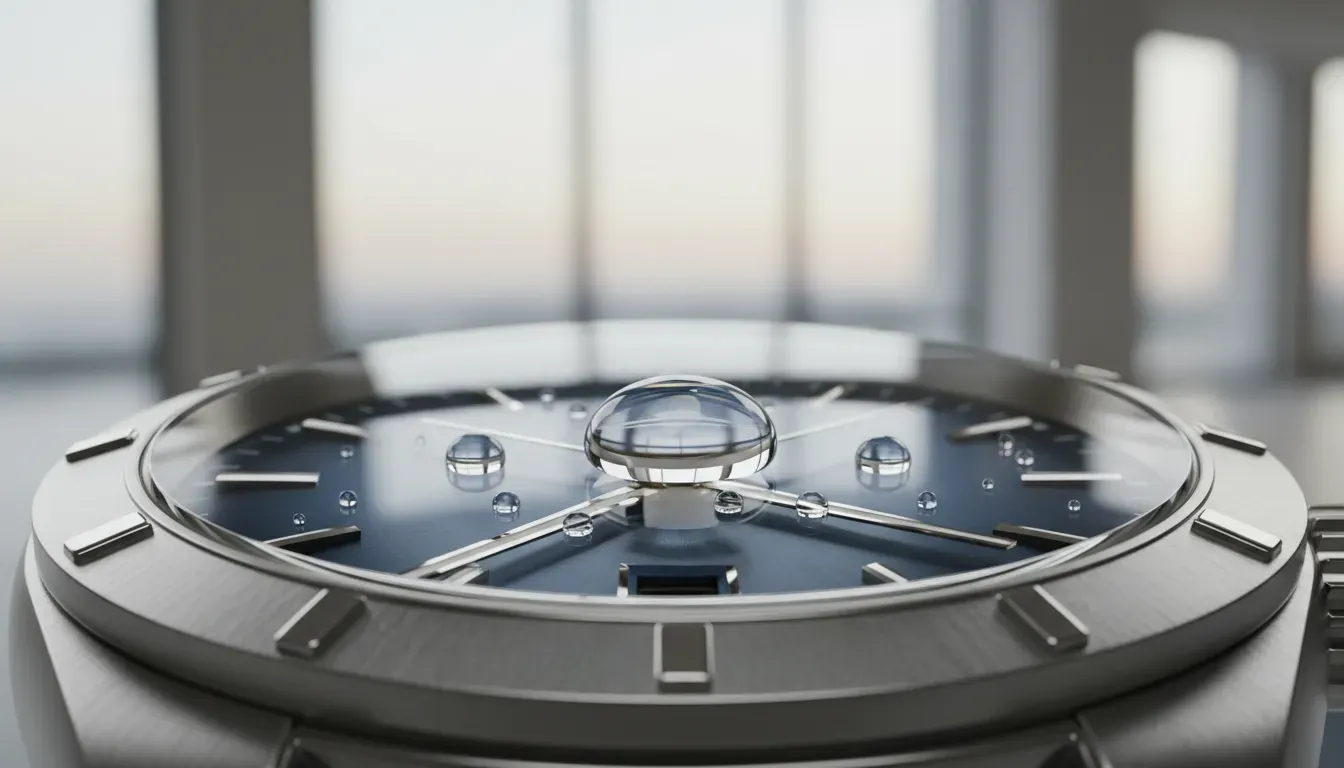
- The Water Drop Test: Place a single, large drop of water on the center of the face.
- On Mineral: The water will spread out and pool flat.
- On Sapphire: Due to surface tension properties, the water will bead up into a tight, defined sphere, almost like mercury. If you tilt the watch, the bead will slide off without leaving a streak.
Is It Worth the Upgrade?
If you are looking at modding your watch or simply buying a new one, the “Sapphire Tax” is usually around $50 to $100 over a standard model.
Is it worth it? Absolutely.
The clarity of the dial is the primary interface between you and the time. Watching a beautiful sunburst dial get obscured by a web of hairline scratches over two years is heartbreaking for an enthusiast. Sapphire preserves the “new watch feel” indefinitely. The case may get dinged, the bracelet may stretch, but that crystal will look exactly the same on the day you hand it down to the next generation as it did the day you bought it.
When you buy sapphire, you aren’t paying for glass. You are paying for permanent optical perfection.
For more insights on maintaining your collection, read our guide on Automatic Watch Winders to keep those movements running as smoothly as your sapphire is clear.