Super Clone Watches: What They Are and How to Spot Them
The complete guide to super clone watches in 2026. Learn what makes them technically remarkable, how authentication experts detect them, the ethical debate, and how to protect yourself when buying secondhand luxury watches.

Apr 23, 2026 - Written by: Brahim amzil
super clone watches
Super clone watches are highly sophisticated, 1:1 scale replica timepieces engineered to look, feel, and function almost identically to authentic luxury watches. Unlike traditional cheap fakes, these premium replicas utilize authentic-grade materials like 904L stainless steel, scratch-resistant sapphire crystals, and exact visual clones of Swiss mechanical movements, making them virtually indistinguishable to the naked eye. They are designed specifically to mimic the exacting standards, weight, and aesthetic details of high-end horological brands without the massive retail price tags or agonizing waitlists.
The watch market has fundamentally shifted over the last decade. Back in the day, spotting a fake watch was an easy parlor trick. You’d look for a ticking quartz seconds hand on what should be a sweeping mechanical dial. You’d notice misaligned bezels, spelling errors, or plating that rubbed off after a few weeks of sweaty wrist wear. Those days are largely gone at the top tier of the replica market. A new breed of illicit manufacturing has stepped out of the shadows.
These aren’t the watches sold out of trench coats in tourist traps. They represent a multi-million-dollar underground industry utilizing advanced CNC machining, 3D laser scanning, and specialized metallurgy. Let’s pull back the curtain on this controversial, fascinating corner of the watch world.
What Exactly Are super clone watches?
To understand the modern replica landscape, you have to separate the junk from the gems. The term “super clone” isn’t just a marketing buzzword used by illicit dealers; it denotes a specific, top-tier grade of replication.
When you pick up one of these pieces, the first thing you notice is the weight. Traditional replicas felt light, hollow, and cheap. Super clone watches perfectly match the gram-weight of the genuine article because they use the exact same metals. If a luxury brand uses a specific titanium alloy or a proprietary 18k rose gold wrapping technique, the top-tier clone factories attempt to replicate that exact metallurgical recipe.
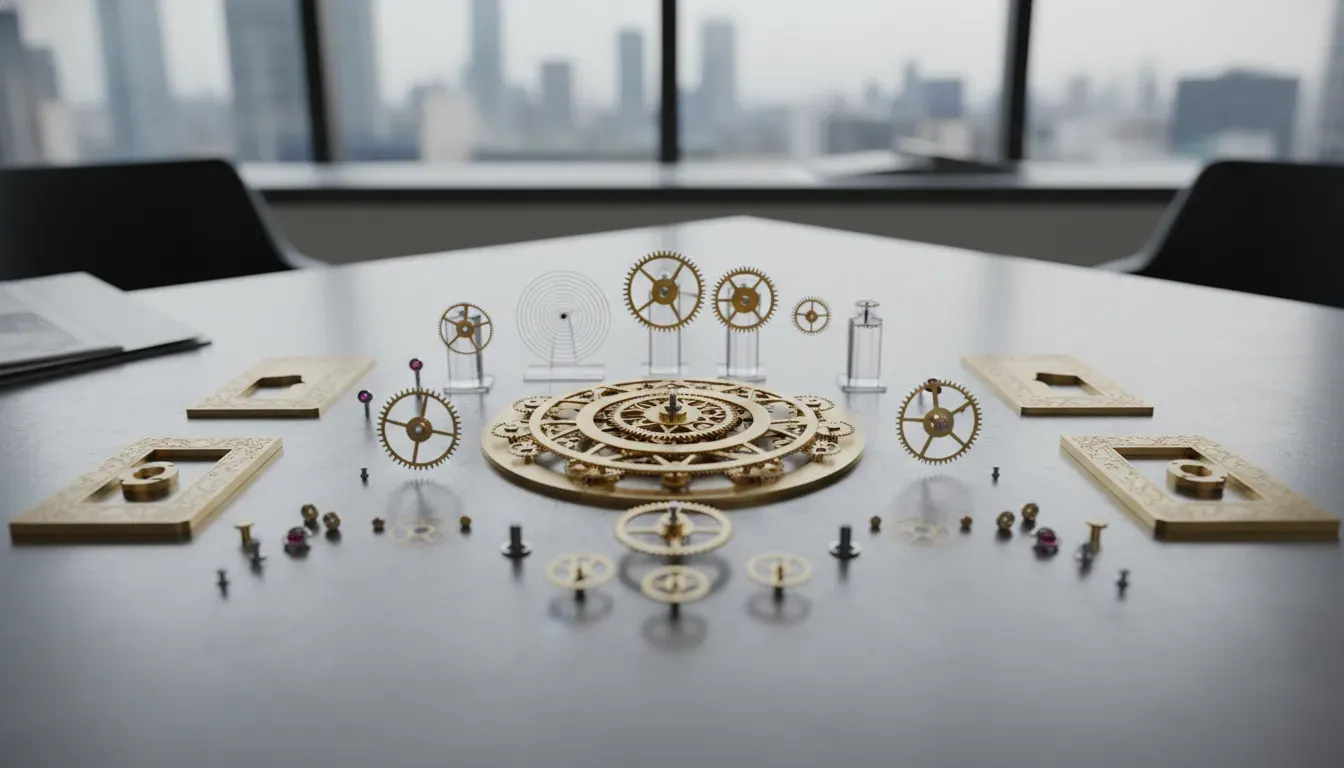
They break down the anatomy of a watch into microscopic details. The magnification of the date window (often called a cyclops lens) is coated with anti-reflective material to give the exact same optical distortion as the original. The luminescent paint applied to the hands and markers glows with the identical hue and intensity in low light.
You might wonder why anyone would go to such lengths for a fake. Demand. With genuine luxury timepieces becoming alternative asset classes—some trading at triple their retail value on the secondary market—the barrier to entry for the average enthusiast has never been higher.
The Mechanics Inside the Case
A beautiful dial means nothing if the engine inside is flawed. This is where the replica industry historically failed. They would take a standard, off-the-shelf Miyota or basic Asian ETA clone movement and slap it inside a high-end case. The watch would run, but the moment a watchmaker opened the caseback, the illusion shattered.
Today, the factories producing these ultra-high-end fakes have entirely reverse-engineered genuine Swiss calibers. They take an original movement apart piece by piece, scanning every bridge, gear, and mainspring. They then manufacture “clone movements.”
These cloned movements feature the same balance wheel bridges, the same jewel placements, and even the identical decorative finishes (like Côtes de Genève or perlage) found on authentic luxury pieces. The power reserve is often comparable, and the beat rate operates at a smooth 28,800 vibrations per hour (vph), giving the seconds hand that signature sweeping motion.
Is it a perfect mechanical match? No. While they look the part, the actual metal alloys used in the microscopic gears of a genuine Swiss watch undergo extreme tempering and quality control for decades of longevity. A clone movement might look identical under a loupe, but it rarely possesses the same decades-long reliability. That said, they are remarkably easy to service. Any watchmaker familiar with standard Swiss movements can often repair or regulate these cloned engines.
The Evolution of the Gray Market
Navigating the gray market of timepieces is complex. You have authorized dealers selling genuine pieces at retail, gray market dealers selling genuine pieces at a premium or discount, and then the dark market of replicas.
Understanding the dynamics of the secondary market reveals a lot about why replicas thrive. When a highly desired steel sports watch has a waiting list of five to ten years, consumer frustration boils over. Some buyers turn to super clones as “stunt doubles” for their genuine pieces. They keep the authentic watch locked in a safe to preserve its investment value, wearing the clone on vacation, at the beach, or during daily commutes where theft is a concern.
Other buyers simply appreciate the design language of iconic horology but refuse to participate in the artificial scarcity games played by luxury conglomerates.
Protecting and Maintaining Your Timepieces
Whether you are a purist who only collects genuine Swiss horology or an enthusiast who studies the fascinating engineering of replicas, maintaining mechanical watches requires the right environment. Mechanical watches, regardless of their origin, have thousands of tiny moving parts that rely on precise lubrication and tension.
Leaving watches scattered on a dresser invites dust, moisture, and accidental drops. Proper storage is paramount. A high-quality display box not only protects the glass and metal from scratches but also keeps the internal lubricants from drying out in direct sunlight. We highly recommend the Premium Wooden Watch Display Box to elegantly organize your collection while keeping dust at bay.
For automatic watches, keeping the mainspring wound when not on the wrist saves you the hassle of resetting the time and date complications. An automatic winder gently rotates the watch, simulating human movement. Check out this Automatic Dual Watch Winder, which offers variable rotation settings to perfectly match your specific movement’s needs.
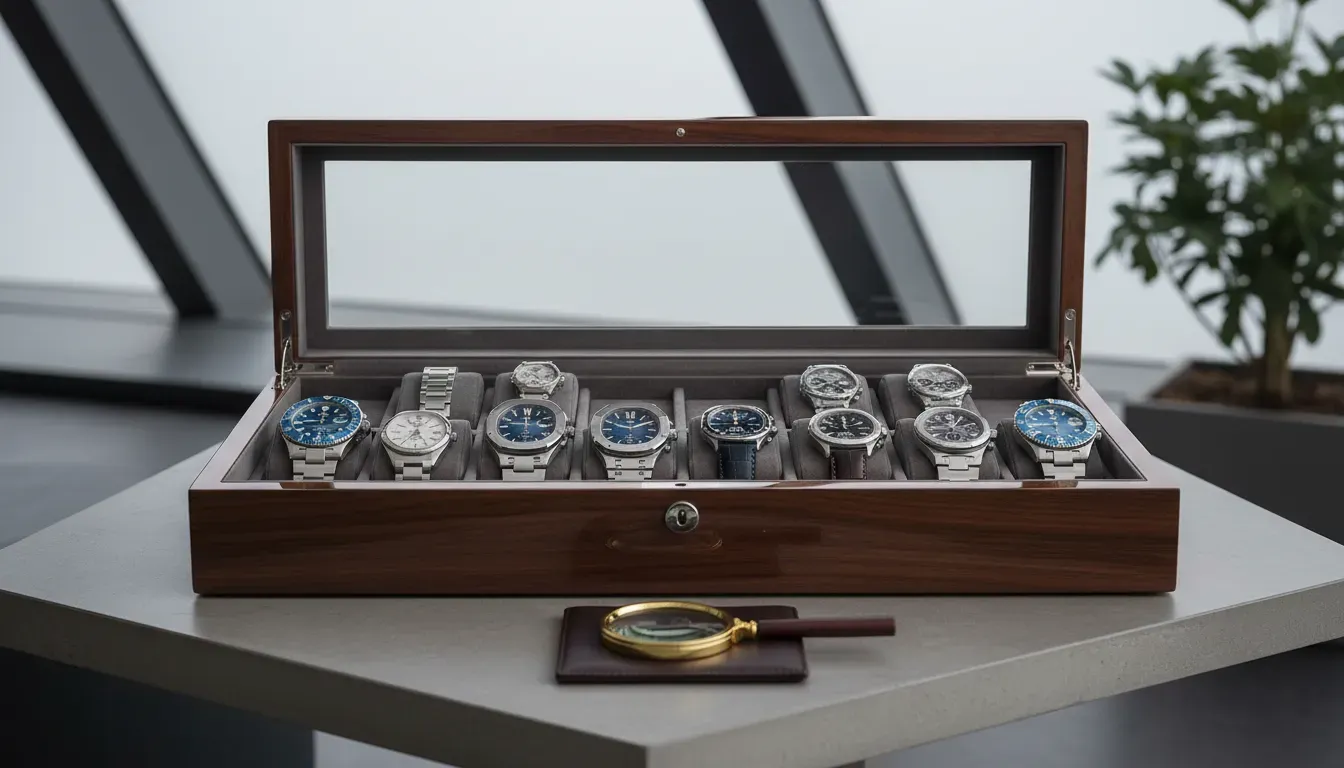
Eventually, every watch enthusiast wants to tinker. Maybe it’s sizing a bracelet, swapping a stainless steel band for a NATO strap, or safely opening a caseback to admire the movement. Using the tip of a pocket knife is a fast way to deeply gouge a beautiful watch case. Invest in a Professional Watch Repair Tool Kit. It includes proper spring bar tools, micro-screwdrivers, and caseback wrenches designed to prevent damage.
Spotting the Difference: The Authenticator’s Challenge
If the fakes are so good, how do professionals catch them? Authenticating a watch used to be a five-second glance. Now, it requires specialized tools, decades of experience, and sometimes microscopic analysis.
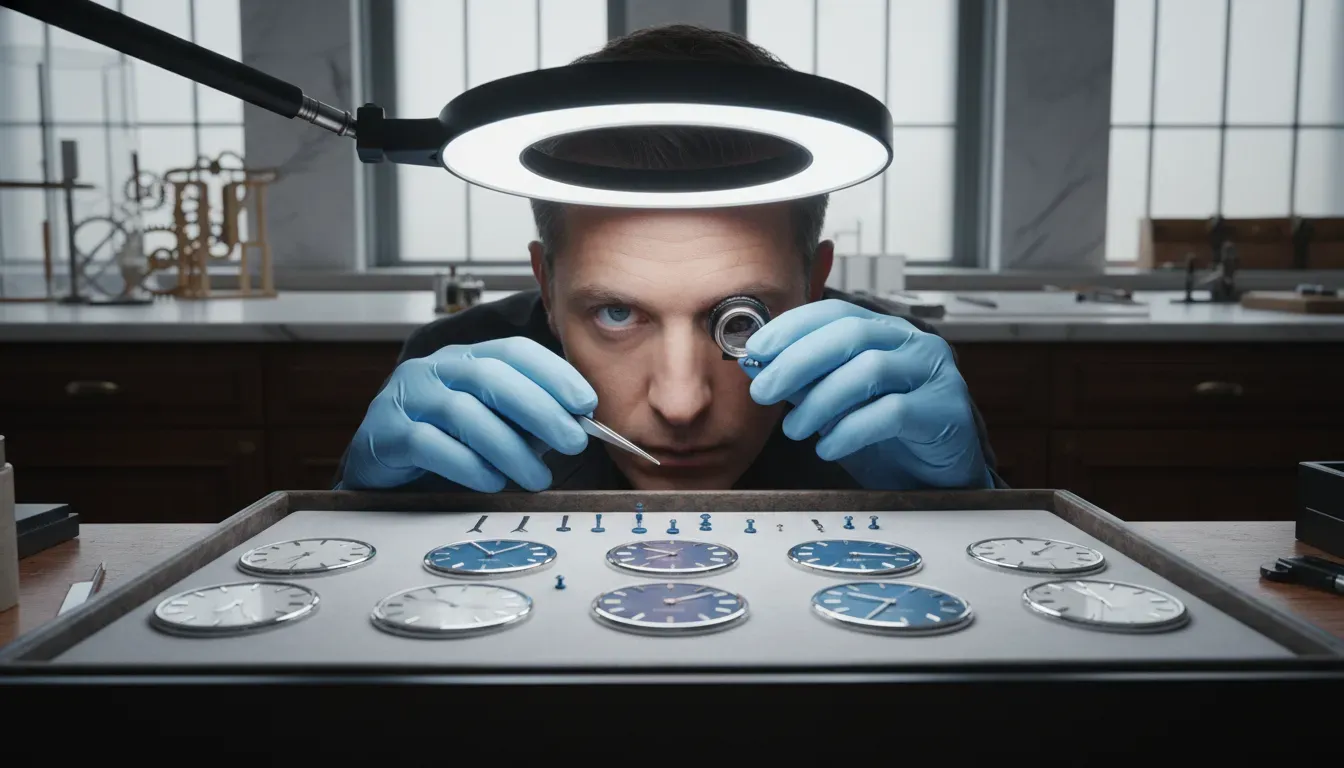
Authenticators look for the “tells.” Even the best factories in the world struggle with absolute perfection. Genuine luxury watchmakers employ artisans who spend hours hand-polishing the bevels of a watch hand. Under a 10x jeweler’s loupe, the edges of a genuine hand will be perfectly smooth and rounded. On a clone, you might see microscopic burrs or jagged edges left over from the stamping process.
The printing on the dial is another battleground. True luxury dials use pad printing techniques that lay down ink with profound thickness and sharpness. The fonts on a clone might be perfectly shaped, but they may lack the subtle 3D texture of the original.
Metals are also heavily tested. While 904L steel is now widely used in top replicas, the platinum or white gold numerals often found on genuine ceramic bezels are too expensive to replicate accurately. Clone factories will use silver paint or inferior platinum plating that lacks the warm, slightly yellowish luster of real white gold.
Weight distribution is a lesser-known but critical test. Because a genuine movement uses specific heavy metals for its automatic rotor, and the clone might use a slightly lighter alloy to cut costs, the overall watch might weigh the same, but the center of gravity will be off. An experienced authenticator can sometimes feel the difference simply by balancing the watch head on their index finger.
The Ethical Dilemma of Buying Replicas
The rise of these hyper-accurate fakes brings massive ethical questions to the forefront of the horology community. Intellectual property theft is the most glaring issue. Luxury brands spend millions on research and development to engineer new shock absorbers, proprietary escapements, and unique case designs. Counterfeiters skip the R&D phase entirely, stealing the final blueprint.
There is also the dark reality of where the money goes. The counterfeit goods industry is frequently linked to organized crime and poor labor conditions. Unlike a transparent Swiss manufacture, illicit factories operate in the shadows without regulatory oversight, environmental standards, or worker protections.
However, the debate isn’t entirely one-sided in the minds of consumers. Many argue that luxury watch brands have created this monster themselves through aggressive price hikes and gatekeeping. When a brand actively restricts supply, forces buyers to purchase thousands of dollars of unwanted jewelry just to “build a purchase history,” and turns a blind eye to authorized dealers selling directly to gray market flippers, consumer loyalty fractures. Read more about the ethics of luxury collecting to see how the community is divided.
Some enthusiasts view buying a replica as a victimless protest against these exclusionary practices. They argue that a person buying a $500 clone was never going to spend $15,000 on the genuine piece anyway, meaning the luxury brand hasn’t actually lost a sale.
The Future of the super clone watches Market
As technology democratizes, the gap between genuine and fake will continue to shrink. 3D printing, advanced CNC milling, and AI-driven design analysis are making it easier and cheaper for illicit factories to achieve micrometer precision.
Brands are fighting back with technology of their own. We are seeing the implementation of blockchain-backed digital certificates, RFID chips embedded in watch crystals, and proprietary serial number engraving techniques that are incredibly difficult to duplicate. The battle has moved from the physical craftsmanship to the digital verification realm.
Yet, as long as human beings assign status, prestige, and emotional value to mechanical objects on their wrists, the shadow market will thrive. The desire to wear a symbol of success is a powerful psychological driver.
Education remains the best defense for buyers navigating the secondary market. If a deal seems too good to be true, it absolutely is. Always “buy the seller” before you buy the watch. Check references, use escrow services, and insist on third-party authentication for high-value transactions.
The horological landscape has been permanently altered by the advancement of replica technology. Whether viewed as an impressive feat of reverse engineering or a blatant theft of artistic property, super clone watches have undeniably forced the luxury watch industry to reevaluate how it manufactures, protects, and authenticates its legacy.