Tag Heuer vs. Longines: Who Rules the Entry-Level Sport Segment?
A deep dive into the battle for your wrist: Longines vs. Tag Heuer. We compare heritage, aesthetics, and resale value to find the true entry-level luxury king.

Feb 11, 2026 - Written by: Brahim amzil
Tag Heuer vs. Longines: Who Rules the Entry-Level Sport Segment?
You have roughly $2,000 to $4,000 burning a hole in your pocket. You want Swiss. You want heritage. Most importantly, you want a watch that says, “I’ve arrived,” without screaming it.
Inevitably, you end up at the same fork in the road that thousands of collectors face every year: Tag Heuer or Longines?
It’s the horological equivalent of BMW versus Mercedes-Benz. Both are pillars of the industry. Both offer incredible build quality that shames the fashion watch brands you used to wear. But they approach the “entry-level luxury” sport segment from completely different philosophies. One is fueled by high-octane gasoline and avant-garde marketing; the other is steeped in traditional elegance and aviation history.
Choosing between them isn’t just about specs. It’s about what story you want your wrist to tell. Let’s break this rivalry down by the metrics that actually matter: heritage, aesthetics, and where your money goes when you try to sell it later.
Heritage: The Racer vs. The Aviator
If we’re talking purely about how long the lights have been on, Longines takes the trophy. Founded in 1832 in Saint-Imier, they actually own the oldest active trademark in the WIPO registry—that famous winged hourglass logo.
Longines spent the early 20th century absolutely dominating the timing of sporting events and, crucially, aviation. Charles Lindbergh didn’t just wear a Longines; he helped design the Hour Angle watch to help pilots navigate the globe. For decades, Longines was arguably on par with Omega and Rolex in terms of movement manufacturing and prestige.
Then the Quartz Crisis hit.
Today, sitting under the massive umbrella of the Swatch Group, Longines has been carefully positioned as the “Master of Elegance.” They are the brand that remembers when watches were tools for exploration, yet they package that history in a way that feels refined, almost aristocratic.
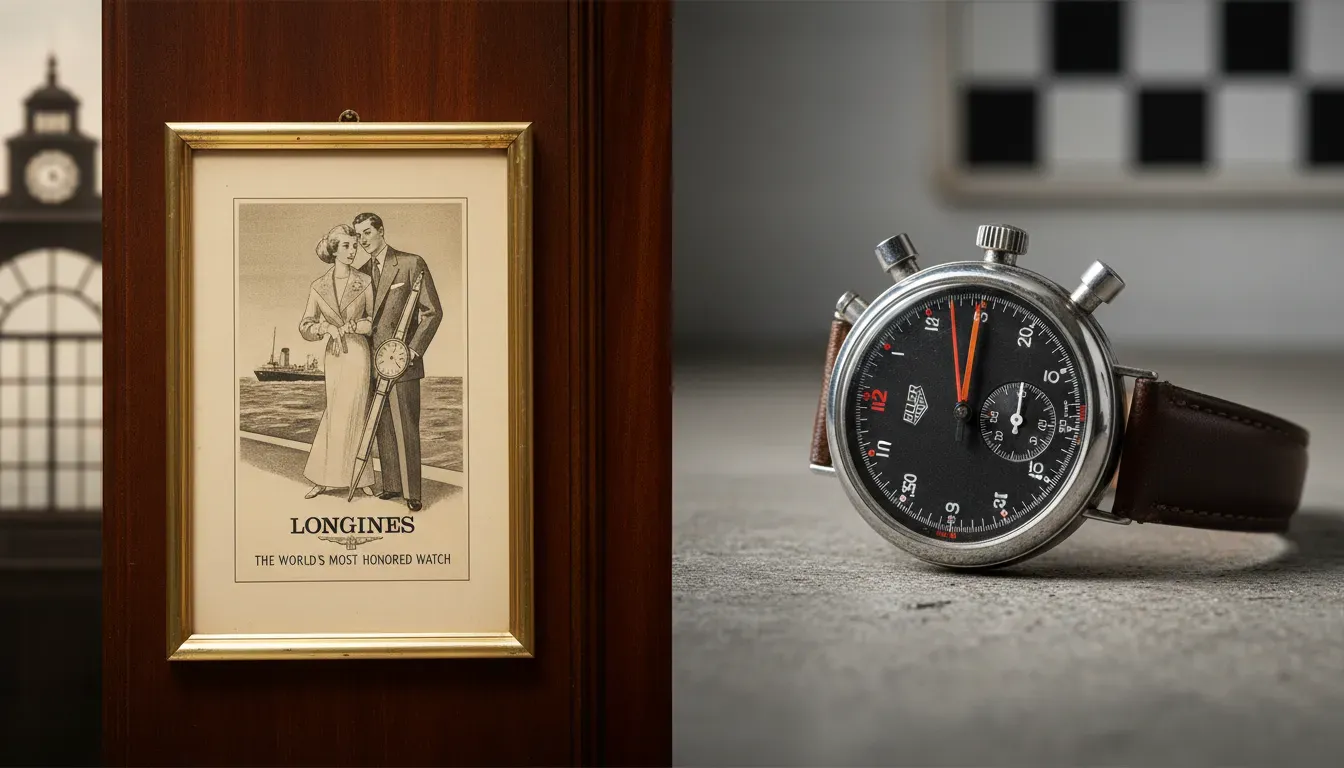
Tag Heuer—or just Heuer, if we’re being purists about the pre-1985 era—has a different vibe entirely. Founded in 1860 by Edouard Heuer, this brand didn’t look to the skies; it looked to the asphalt.
Heuer is the godfather of the dashboard timer. In the 1960s and 70s, Jack Heuer cemented the brand’s legacy by putting chronographs on the wrists of every Formula 1 driver that mattered. Jo Siffert, Niki Lauda, and famously, Steve McQueen in Le Mans. When you wear a Tag Heuer Monaco, you aren’t just wearing a square watch. You’re wearing a piece of racing lore.
While Longines feels like the distinguished grandfather with stories of crossing the Atlantic, Tag Heuer is the cool uncle who drives a vintage Porsche a little too fast.
The Modern Positioning Struggle
Here is where it gets tricky. Both brands have been shifted by their corporate overlords.
- Longines (Swatch Group): Positioned strictly below Omega. This means they get incredible technology (like silicon balance springs) but are kept in a specific price bracket to avoid cannibalizing the Speedmaster/Seamaster sales.
- Tag Heuer (LVMH): Positioned as the avant-garde, youthful gateway to LVMH’s watch division (which includes Hublot and Zenith). They are allowed to take more risks, embrace smartwatches, and push modern materials.
If you love history books and vintage revivals, Longines wins. If you love adrenaline and pop culture, Tag takes it.
Aesthetics: Elegant Utility vs. Aggressive Modernity
Walk into a boutique, and you can spot the difference from twenty feet away.
Longines designs generally lean into “Elegant Utility.” Even their sportiest dive watches, like the HydroConquest, maintain a certain level of polish that allows them to slide under a dress shirt cuff. Their recent hit, the Longines Spirit collection, is a masterclass in this. It uses applied Arabic numerals and textured dials to evoke the 1940s pilot aesthetic, but with modern finishing.
However, Longines sometimes struggles with “lug-to-lug” length. A 40mm Longines can often wear like a 42mm because the lugs (the metal arms that hold the strap) are long and straight. It’s a quirk collectors love to complain about on forums.
On the other hand, we have the Longines HydroConquest. It’s a polarizing design—snowflakes hands, big 12-6-9 numerals—but it offers ceramic bezels and incredible finishing for under $2,000. It feels substantial, dense, and expensive.
The Tag Heuer Look
Tag Heuer designs are sharper, angular, and unapologetically modern. They prioritize legibility at high speeds.
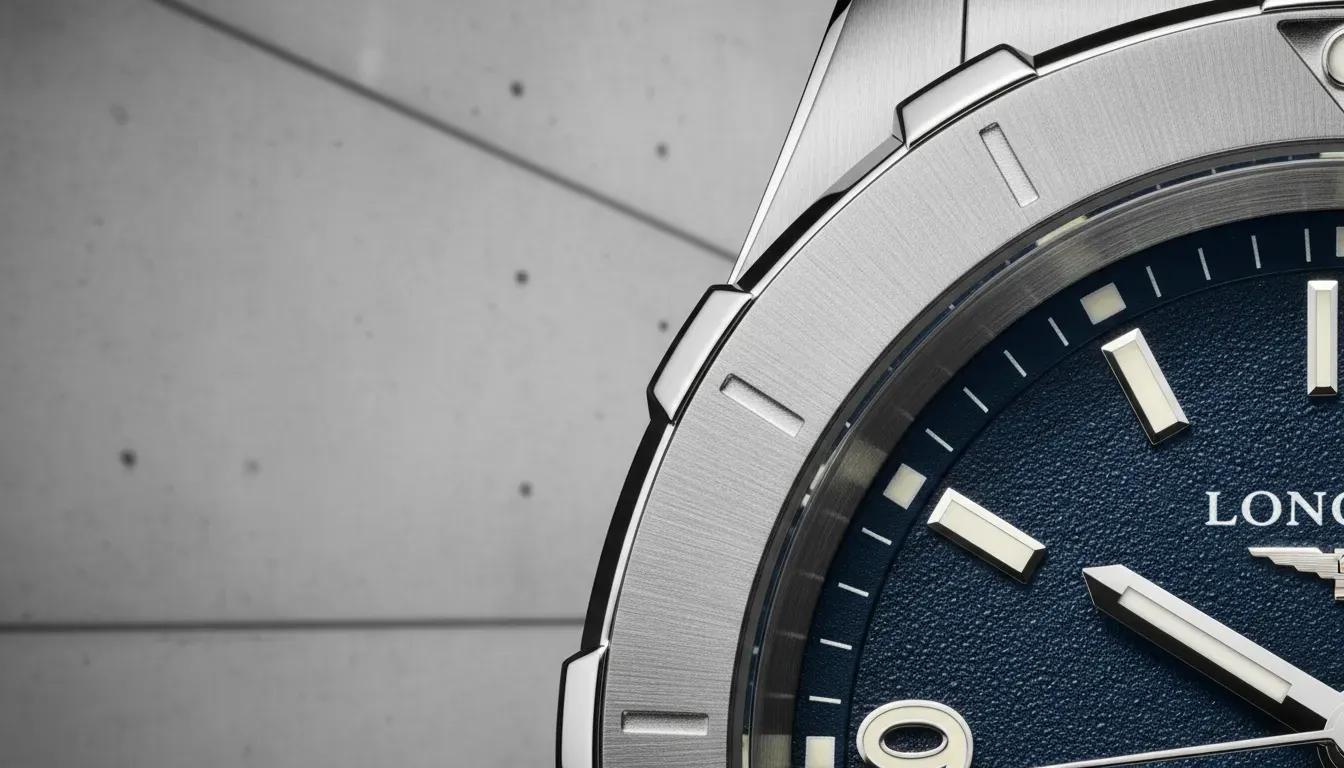
Take the Aquaracer. It doesn’t look like a Submariner clone; it has its own identity with that dodecagonal (12-sided) bezel. The bezel isn’t just for looks; it’s designed to be gripped easily with diving gloves. The finishing is usually brushed steel, meant to take a beating against a doorframe or a surfboard.
Then you have the Carrera. While the vintage re-issues are beautiful, the modern Carreras (especially the Skeleton dials) are aggressive. They are busy, complex, and technical. They appeal to the guy who loves looking at an engine bay.
One area where Tag Heuer has arguably improved faster than Longines is the bracelet quality. The modern Aquaracer clasps are fantastic, featuring on-the-fly adjustment systems that are a godsend on hot days when your wrist swells.
The Design Verdict:
- Go Longines if: You prefer symmetry, vintage cues, leather straps, and a watch that works at a wedding as well as the office.
- Go Tag Heuer if: You want bracelet watches, ceramic bezels, angular cases, and a sporty, youthful presence.
If you are looking for more advice on styling these pieces, check out our guide on matching luxury watches with casual wear.
Resale Value: The Elephant in the Room
Let’s rip the band-aid off: Neither of these brands is an investment.
If you buy a brand-new Tag Heuer or Longines at full retail price from a boutique, you are going to lose money the moment you walk out the door. We are talking about an immediate depreciation of 30% to 50%, depending on the specific model.
Do not let a salesperson tell you otherwise. These are mass-produced luxury items, not limited-production Patek Philippes.
However, there are nuances to how they depreciate.
The Tag Heuer “Brand Tax”
Tag Heuer has massive brand recognition. Ask a random person on the street to name a luxury watch, and after Rolex, they will likely say Tag Heuer. Because of this marketing muscle, Tag Heuer watches maintain a higher liquidity. Meaning, it is easier to sell a Tag Heuer quickly, even if you are taking a hit on the price. There is always a buyer for a used Aquaracer or Formula 1.
The Longines Value Proposition
Longines suffers a bit more on the secondhand market, simply because they don’t have the same “hype” factor with the general public. However, enthusiasts know that Longines offers better “bang for buck” regarding movement technology.
If you are smart, you use this to your advantage. Buying a pre-owned Longines is one of the best value plays in the entire watch industry. You can pick up a watch with a column-wheel chronograph movement (a high-end feature) for a fraction of what you’d pay for a similar Omega or Breitling.
Pro Tip: If you are worried about value retention, stick to the icons.
- For Tag: The Tag Heuer Carrera and Monaco.
- For Longines: The Legend Diver and the Spirit Zulu Time.
Avoid the quartz models if you care about resale. The mechanical (automatic) versions always hold their value better over the long term.
The Movement Wars: Calibre 5 vs. L888
We can’t ignore the engines.
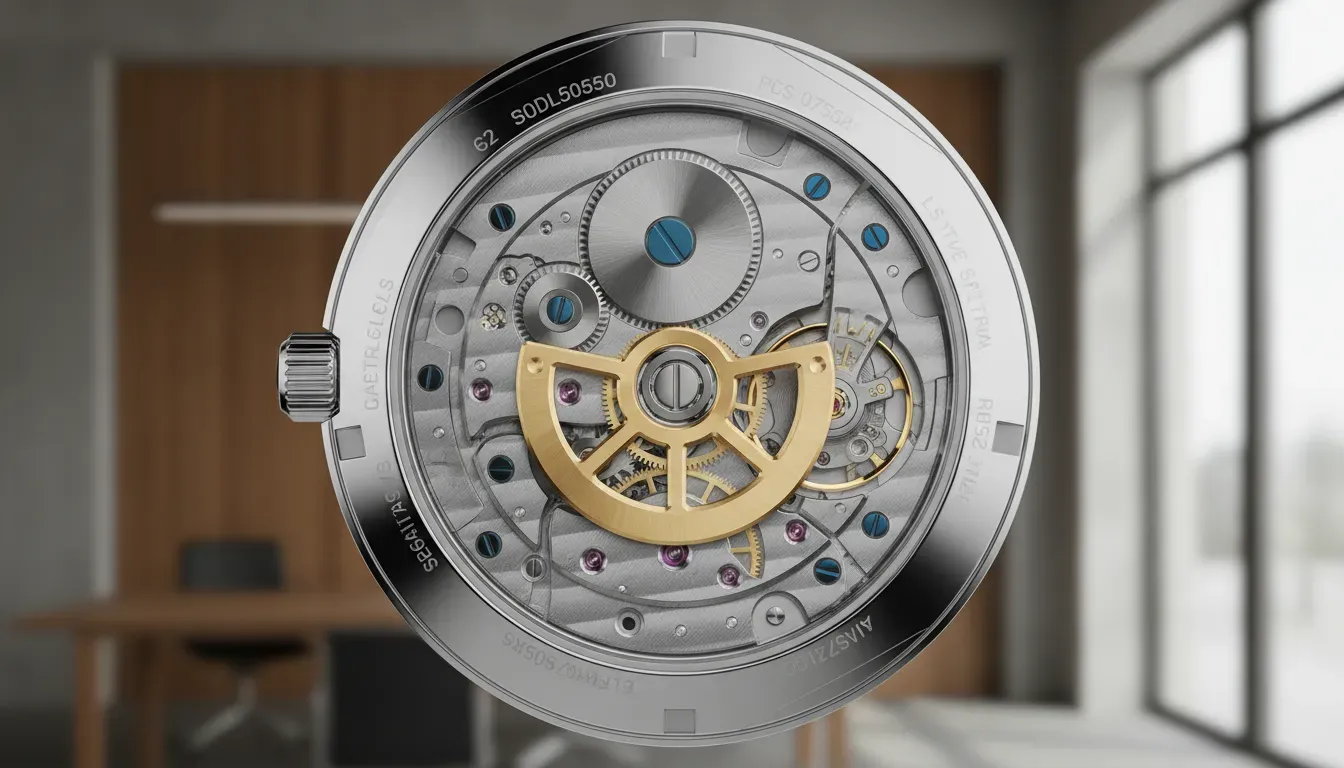
For years, Tag Heuer was criticized for using “off-the-shelf” movements (mostly Sellita or ETA) and rebranding them as “Calibre 5.” There is nothing wrong with these movements—they are reliable, cheap to service, and accurate—but at the $3,000 price point, enthusiasts wanted more. Recently, Tag has introduced the Heuer 02 in-house movement, which is a beast: 80-hour power reserve and vertical clutch. But it’s mostly found in their pricier pieces.
Longines, thanks to Swatch Group, has access to ETA’s special “skunkworks.” They use movements like the L888. This is exclusively made for Longines. It runs at a slightly unusual frequency to boost the power reserve to 72 hours. It also features a silicon balance spring, making it highly resistant to magnetism (phones, laptops, MRI machines).
Technical Edge: Longines. You are generally getting a better, more modern movement specification for the dollar in the $1,500–$3,000 range.
The Final Verdict: Which One Wins?
So, who rules the entry-level sport segment?
It depends entirely on who you are.
Choose Longines if you are the quiet professional. You value history, technical specs, and getting the most watch for your money. You probably read watch blogs and care about things like “silicon hairsprings.” You want a watch that looks timeless and pairs perfectly with a suit or a heavy wool sweater. The Longines Spirit or Legend Diver are choices that earn a nod of respect from serious collectors.
Choose Tag Heuer if you live a fast-paced life. You want a watch that feels robust, sporty, and recognizable. You want the association with F1 racing and the cool factor of the avant-garde. You prioritize a modern bracelet and a sharp, architectural case design over the movement inside. The Aquaracer is arguably the best “do anything, go anywhere” watch for a young professional.
Both brands are gateways. They are the first step into a larger world of horology. The “winner” is the one that makes you smile when you check the time, even when you already know what time it is.
Whatever you choose, wear it hard. Watches were meant to be worn, not kept in a safe. For more on keeping your new acquisition pristine (or not), read our thoughts on watch storage and organization.