Vintage Omega Seamaster: A Case Study in Affordable Vintage
Discover why the vintage Omega Seamaster remains the ultimate value proposition in horology. A deep dive into models, movements, and buying strategies.

Vintage Omega Seamaster: A Case Study in Affordable Vintage
The vintage Omega Seamaster represents the absolute sweet spot in the horological market because it combines in-house Swiss engineering, legitimate historical prestige, and durable everyday wearability for a price often hovering between $800 and $2,000. Unlike the inflated market for vintage Rolex, the Seamaster—specifically models from the “Golden Era” of the 1950s and 60s—offers collectors access to some of the finest movements ever mass-produced, such as the legendary 500-series calibers, without requiring a five-figure investment. It is the definitive proof that “affordable” does not have to mean “cheap.”
The Elephant in the Room: Why “Affordable” Matters
Let’s be real for a second. The vintage watch market has gone insane over the last decade. Watches that used to cost a few hundred bucks are now trading for the price of a mid-sized sedan. It’s discouraging for new enthusiasts and annoying for seasoned collectors.
But the Omega Seamaster has managed to stay grounded.
Why? Volume. Omega was a powerhouse in the mid-20th century. They weren’t a boutique brand making five watches a year for royalty; they were the industrial titan of Swiss watchmaking. They produced hundreds of thousands of these watches. This scarcity-versus-availability dynamic works in your favor. Because there are so many surviving examples, the prices haven’t skyrocketed into the stratosphere like the Submariner or the Speedmaster.
This availability doesn’t dilute the quality. It just means you don’t have to mortgage your house to own a piece of mechanical art.
The Golden Era: Movements That Just Won’t Quit
When you pop the back off a vintage Seamaster produced between 1950 and 1969, you aren’t looking at generic, off-the-shelf components. You are looking at the peak of Omega’s manufacturing prowess.
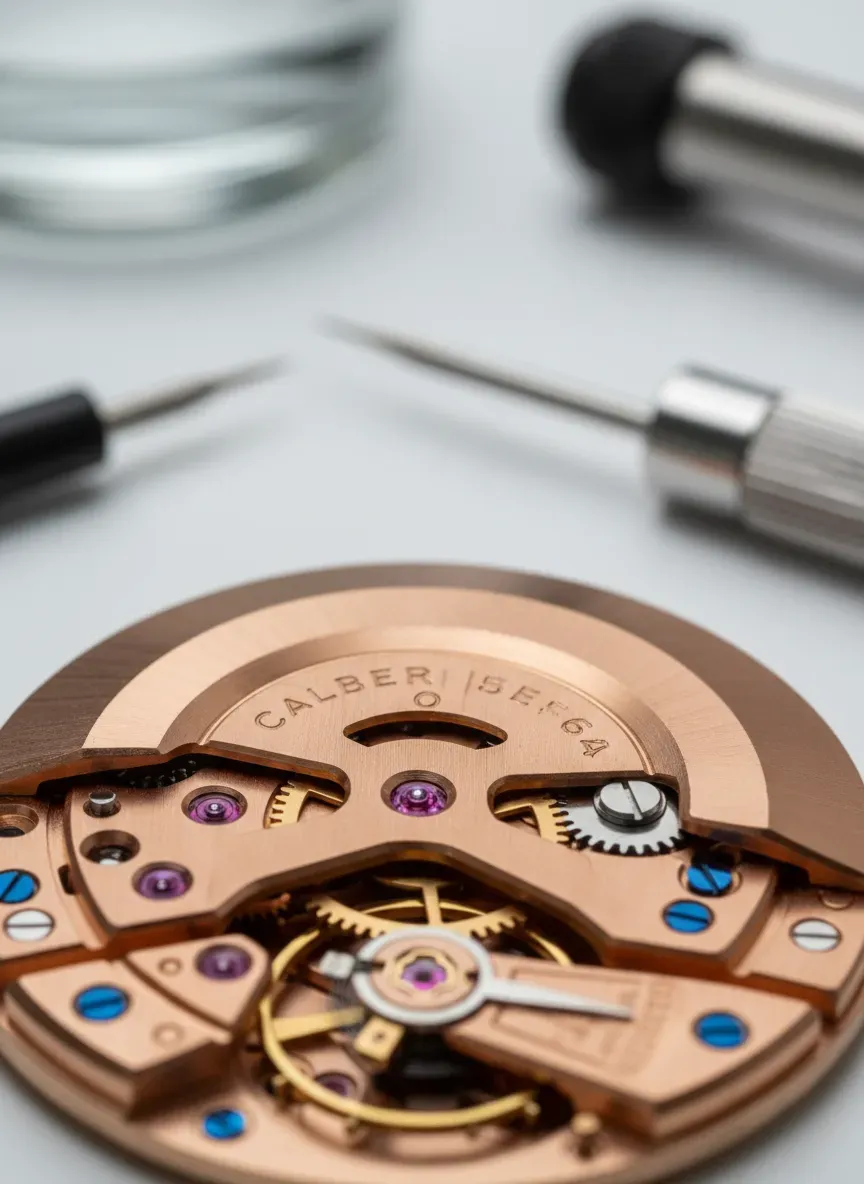
We need to talk about the movements. Specifically, the copper-colored, rose-gold plated beauties that beat inside these cases. The Caliber 500 series (501, 550, 564, etc.) are widely regarded by watchmakers as some of the best automatic movements ever built. They are robust, easy to service, and incredibly accurate.
If you are looking to park your money in something tangible, understanding the mechanics is key. You can read more about what makes a watch a financial asset in our guide to entry-level investments, but the short version is this: Value is driven by mechanical integrity. A Seamaster with a clean Caliber 562 is an engine that, with basic maintenance, will outlive you.
Compare this to modern “affordable” watches. Today, $1,000 buys you a decent watch with a generic ETA or Sellita movement. It’s fine. It works. But it lacks soul. It lacks the history of a movement designed in-house by a company trying to beat Rolex at chronometry competitions.
Understanding the Models: It’s Not Just One Watch
Saying you want a “Vintage Seamaster” is like saying you want a “Ford.” It could mean a Mustang, or it could mean a Fiesta. The Seamaster line is vast, but for the purpose of affordable vintage, we are looking at specific dress-casual hybrids.
The “Fat Lugs”
Early 1950s models often feature thicker, beefier lugs. These give the watch a substantial presence on the wrist despite the case diameter usually being around 34mm or 35mm. Don’t let the millimeter size fool you. Vintage watches wear differently. A 34mm “Fat Lug” Seamaster wears larger than a modern 36mm dress watch because of the case architecture.
The Seamaster De Ville
In the 1960s, Omega started moving toward elegance. They introduced the monocoque (one-piece) case. This design is sleek, sealing the watch from the front to improve water resistance. The “Seamaster De Ville” is perhaps the quintessential Mad Men watch. It is understated class.
However, a word of caution on monocoque cases: they are harder to service. You can’t just screw off the back; the movement comes out through the front. Ensure your watchmaker knows what they are doing.
If you want to dive deeper into other brands that offer this level of quality for the price, check out our breakdown of top 10 entry-level luxury watches, where the Seamaster frequently reigns supreme.
The Minefield: Redials and Frankens
Here is the scary part. Because these watches are affordable and plentiful, they are often the target of unscrupulous sellers.
The biggest enemy of the vintage Omega collector is the “Redial.”
A redial happens when a watch dial is damaged (moisture, sun, age), and someone strips the paint off to reprint it. To the untrained eye, a redial looks “clean” and “new.” To a collector, it renders the watch almost worthless.
A vintage watch should look old. It should have patina. The dial might be a creamy off-white or have tiny imperfections (often called “stardust”).
How do you tell? Look at the font. Omega’s font was incredibly precise.
- The Coat Hanger “S”: On many vintage models, the “S” in Seamaster should look like a coat hanger with flat ends, not a standard curved “S”.
- SWISS MADE: This should be at the very bottom. If the minute track cuts through the letters, or if the font looks sloppy, run away.
If you are serious about hunting for these gems, you need to educate yourself on the nuances. We have a dedicated guide on how to spot a fake or modified watch that is essential reading before you drop a single dollar.
The “Beefy” Case and the Polishing Problem
Another issue is over-polishing. A vintage Seamaster has sharp, defined lines, particularly on the lugs. Over the last 60 years, many of these watches have been polished by jewelers trying to make them shiny for resale.
When you polish metal, you remove material. Eventually, the sharp chamfers on the lugs turn into amorphous blobs. We call this the “melted soap” look. You want a case that shows scratches but retains its original geometry. Scratches can be lived with; metal that has been buffed away is gone forever.
Accessories: Changing the Vibe
One of the best things about a vintage Seamaster is its versatility. It is a “strap monster.”
You can put it on a glossy black crocodile strap, and it’s a tuxedo watch. Swap that for a distressed brown leather strap, and it pairs perfectly with a t-shirt and jeans. Because the lug width is usually a standard 18mm, you have endless options.
If you pick up a vintage piece, the original leather strap is likely long gone or unusable. Upgrading the strap is the easiest way to increase the visual value of the watch immediately.
Fullmosa Quick Release Leather Watch Strap
Maintenance: The Reality of Vintage Ownership
Owning a vintage mechanical watch is a relationship. It requires care.
These watches were “waterproof” in 1965. They are absolutely not waterproof today. Do not wear your vintage Seamaster in the shower. Do not swim with it. The gaskets are old, and the metal may have pitted slightly over decades, compromising the seal.
The Crystal
Most vintage Omegas use acrylic crystals (Hesalite). They give the watch a warm, vintage glow that sapphire can’t replicate. The downside? They scratch easily. The upside? You can fix them yourself in five minutes.
A tube of polishing compound is a vintage collector’s best friend. A little dab and some elbow grease will remove most surface scratches from an acrylic crystal, making the dial pop again.
Polywatch Plastic Lens Scratch Remover
Service Intervals
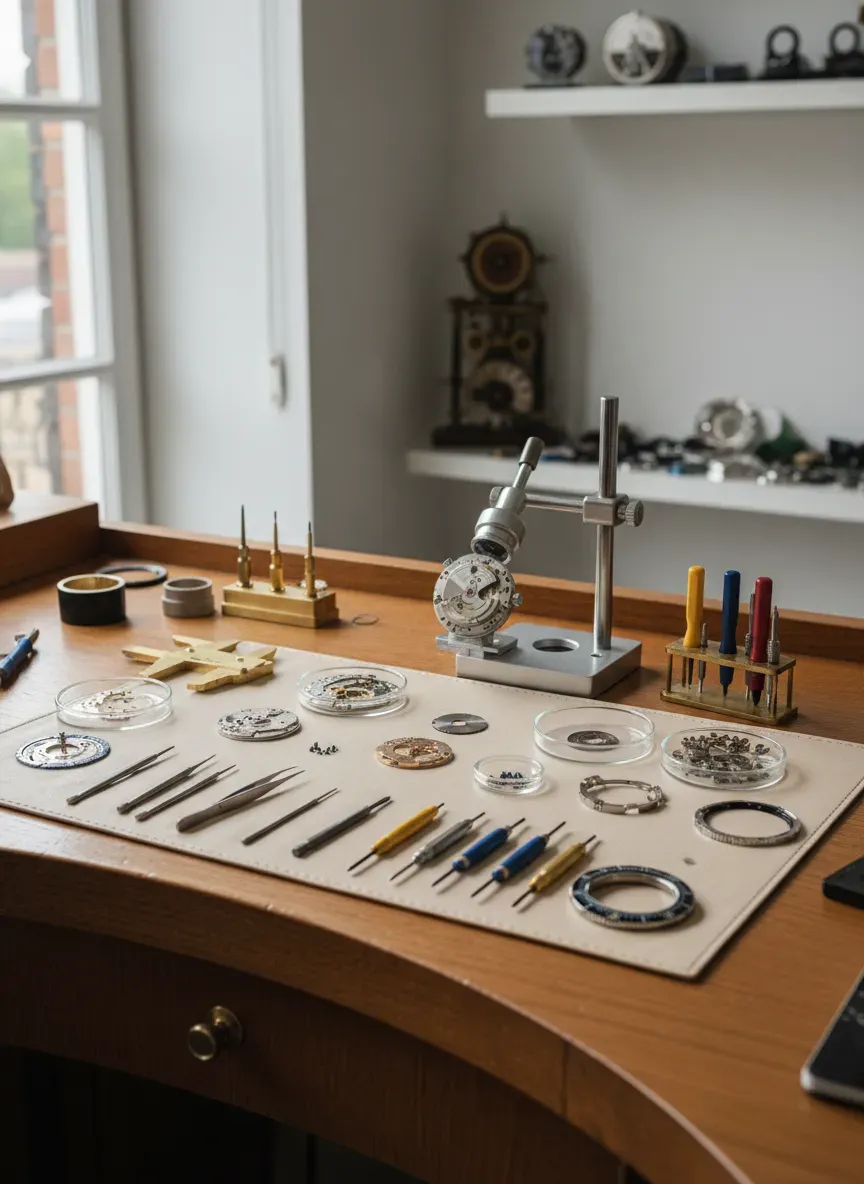
If you buy a watch from a private seller on eBay or a forum, assume it hasn’t been serviced in a decade. Factor in an extra $200-$300 for a local watchmaker to clean and oil the movement. Once that’s done, you’re good for another 5 to 7 years.
Price vs. Value: The Math
Let’s break down the financials.
You buy a decent, gold-capped Omega Seamaster Caliber 562 for $1,200. You spend $250 on a service. You are in for $1,450.
You now own a Swiss luxury watch with genuine history. If you decide to sell it three years later, provided you didn’t drop it on concrete, it will likely be worth… $1,450, or maybe $1,600 depending on inflation and market trends.
Now, go buy a generic fashion watch for $500. Three years later, it is worth $0.
The Seamaster is “affordable” not just because the entry price is low, but because the cost of ownership is negligible. It functions as a savings account that tells time.
The “Turler” and “Tiffany” Factor
Keep an eye out for “double-signed” dials. Occasionally, you will see a Seamaster with “Turler” or “Meister” or even “Tiffany & Co.” printed on the dial. These were retailers who stamped their names on the watches they sold.
These are rare. They command a premium. But sometimes, sellers don’t know what they have. Finding a double-signed Seamaster for a standard price is the holy grail of thrift store hunting. It adds a layer of provenance that makes the watch unique.
Why It Beats the Modern Reissue
Omega, like many brands, loves to release “heritage” models. They will release a brand new Seamaster 1948 Limited Edition that looks exactly like the vintage one.
The price? $7,000.
The vintage original? $1,500.
The modern version is technically superior. It has a Co-Axial movement, it’s anti-magnetic, and you can swim with it. But does it feel the same? No. The vintage piece has survived decades. It has seen things. The radium or tritium lume has aged to a lovely yellow. The dial has character.
Buying the vintage original is buying the real thing, not the tribute act.
To truly understand the lineage of this model and appreciate the subtle differences between reference numbers, having a solid reference book on hand is invaluable for the budding collector.
Conclusion: The Entry Point is the Destination
Often, we talk about “entry-level” watches as stepping stones. You buy the Seamaster so you can trade up to a Speedmaster, then trade up to a Rolex Submariner, then a Patek.
But the vintage Seamaster breaks this rule. Many collectors who own six-figure watch collections still keep their $1,000 Seamaster. They still wear it.
It isn’t just a starter watch. It is a destination in itself. It represents a time when design was pure, movements were mechanical marvels, and a watch was a companion for life.

When you strap a 1962 Seamaster to your wrist, you aren’t signaling that you have money to burn. You are signaling that you have taste. You appreciate engineering. You value longevity over hype.
In a world of disposable tech and fast fashion, the vintage Omega Seamaster stands as a testament to the enduring appeal of quality. It is, without a doubt, the smartest $1,000 you can spend on your wardrobe.