Pre-Owned Rolex Air-King vs. New Tudor Ranger
A battle between the Crown and the Shield. We compare the investment value of a vintage Rolex Air-King against the modern utility of the new Tudor Ranger.

Pre-Owned Rolex Air-King vs. New Tudor Ranger
Deciding between a pre-owned Rolex Air-King and a new Tudor Ranger ultimately comes down to a choice between asset stability and modern technical superiority. If your priority is brand cachet, long-term value retention, and wearing a piece of horological history, the Rolex Air-King (specifically references like the 14000 or 5500) is the winner, despite its older hollow-link bracelets and smaller 34mm case size. However, if you are looking for a robust “do-it-all” field watch with a modern COSC-certified in-house movement, on-the-fly clasp adjustment, and a worry-free manufacturer warranty, the Tudor Ranger is objectively the better watch for daily wear. The Ranger offers 90% of the Rolex experience for a fraction of the price, while the Air-King offers the intangible, yet powerful, status of “The Crown.”
The Crown vs. The Shield: Sibling Rivalry
It is the classic horological dilemma. Do you buy the entry-level ticket to the big show, or do you buy the headliner from the opening act? For decades, Hans Wilsdorf’s dual-brand strategy has created this exact friction. Rolex is the king, the unreachable summit of marketing and prestige. Tudor is the prince, the shield that guards the throne, offering similar aesthetics for the working man.
But the dynamic has shifted. Tudor is no longer just using off-the-shelf ETA movements to mimic big brother. They are innovating. Meanwhile, the price of entry for a steel Rolex has skyrocketed, pushing buyers toward vintage markets.
When we scan the market for the Top 10 Entry-Level Luxury Watches, this specific matchup—the vintage Air-King versus the modern Ranger—stands out because the prices often overlap. You can find a decent condition Air-King Ref. 14000 for roughly the same price, or slightly more, than a brand-new Ranger on a bracelet.
Let’s strip away the hype and look at the metal.
The Case for the Pre-Owned Air-King
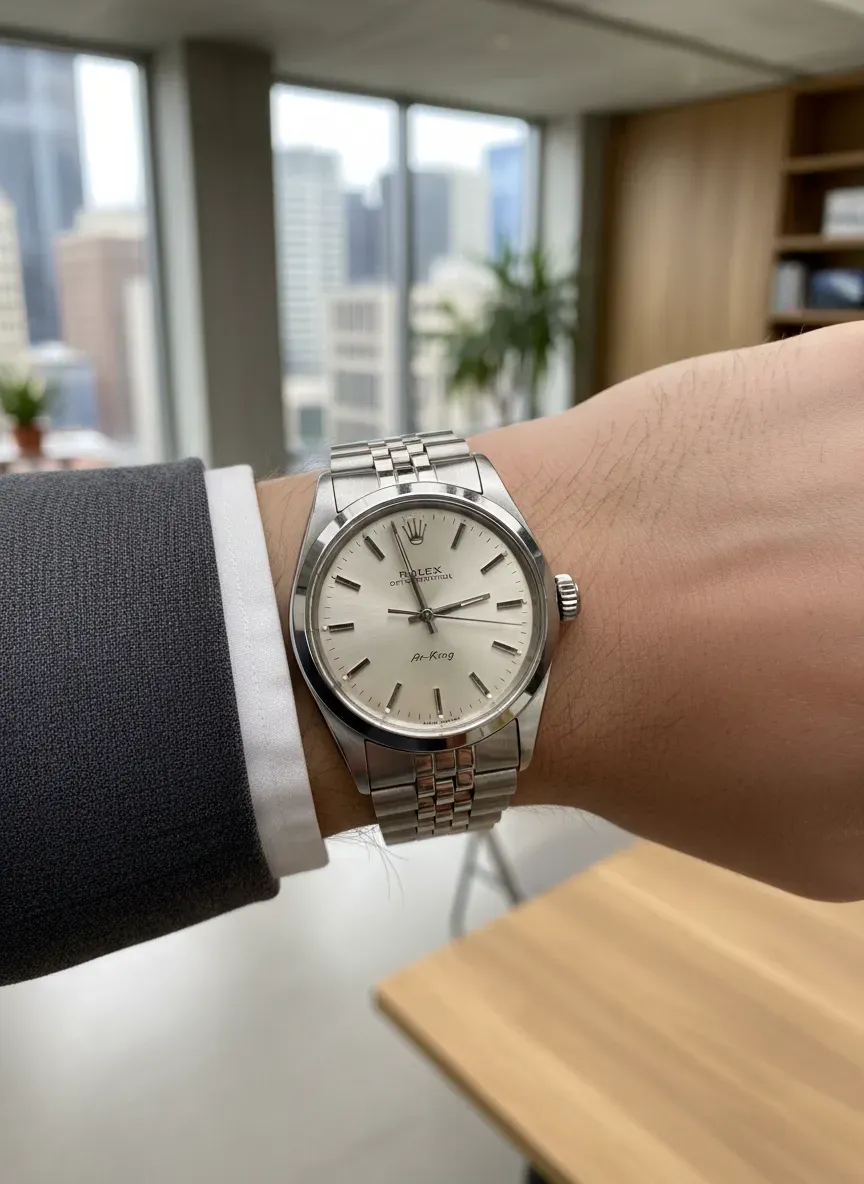
The Air-King is pure, unadulterated Rolex DNA. Originally released to honor RAF pilots in World War II, it is a model steeped in history. When you strap on a Ref. 5500 or a 14000, you are wearing a design that has remained virtually unchanged for half a century.
The primary draw here is the dial. That simple text, “OYSTER PERPETUAL AIR-KING,” carries weight. The finishing on the indices, even on 30-year-old models, catches the light in a way that lesser brands still struggle to replicate.
However, you have to accept the “vintage charm,” which is a polite way of saying “old tech.”
- Size: Most accessible Air-Kings are 34mm. On a modern wrist, this feels small. It’s classic, yes, but for those used to 40mm divers, it can feel like a toy.
- The Bracelet: The old stamped clasps and hollow end links rattle. They don’t inspire the confidence of a bank vault. They feel like jewelry, not tools.
- Service Costs: You are buying a machine that has lived a life. A service at a Rolex Service Center will set you back nearly a grand, drastically altering the value proposition.
The Case for the Modern Tudor Ranger
The Ranger is the spiritual successor to the explorative watches of the 1950s, specifically the British North Greenland Expedition. But unlike the Air-King, the new Ranger is a technical beast.
It houses the Manufacture Calibre MT5402. This is a COSC-certified chronometer with a 70-hour power reserve and a silicon hairspring. You can put this watch down on Friday evening and pick it up Monday morning, and it’s still ticking. The vintage Air-King? It died Sunday morning.
Then there is the bracelet. The Ranger features the “T-fit” clasp, allowing for tool-free micro-adjustments. Your wrist swells in the heat? Slide it open a few millimeters. It is a game-changer for comfort.
If you want to grab a piece that exudes that field watch vibe, you can check out the Tudor Ranger listings or reviews to see the specs in detail.
The Independent Route: How Oris Remains a Value King
While the Rolex vs. Tudor battle dominates the headlines, there is a third path. Some collectors refuse to play the corporate games of the big luxury conglomerates. They want independence. They want a brand that answers only to itself.
This is where Oris enters the chat.
Oris has quietly cemented itself as one of the few independent Swiss manufacturers that offer incredibly high value. They aren’t trying to be Rolex. They are happily being Oris. Their motto, “Real Watches for Real People,” sounds like marketing fluff until you handle an Aquis or a Big Crown Pointer Date.
The Aquis and Big Crown Lines
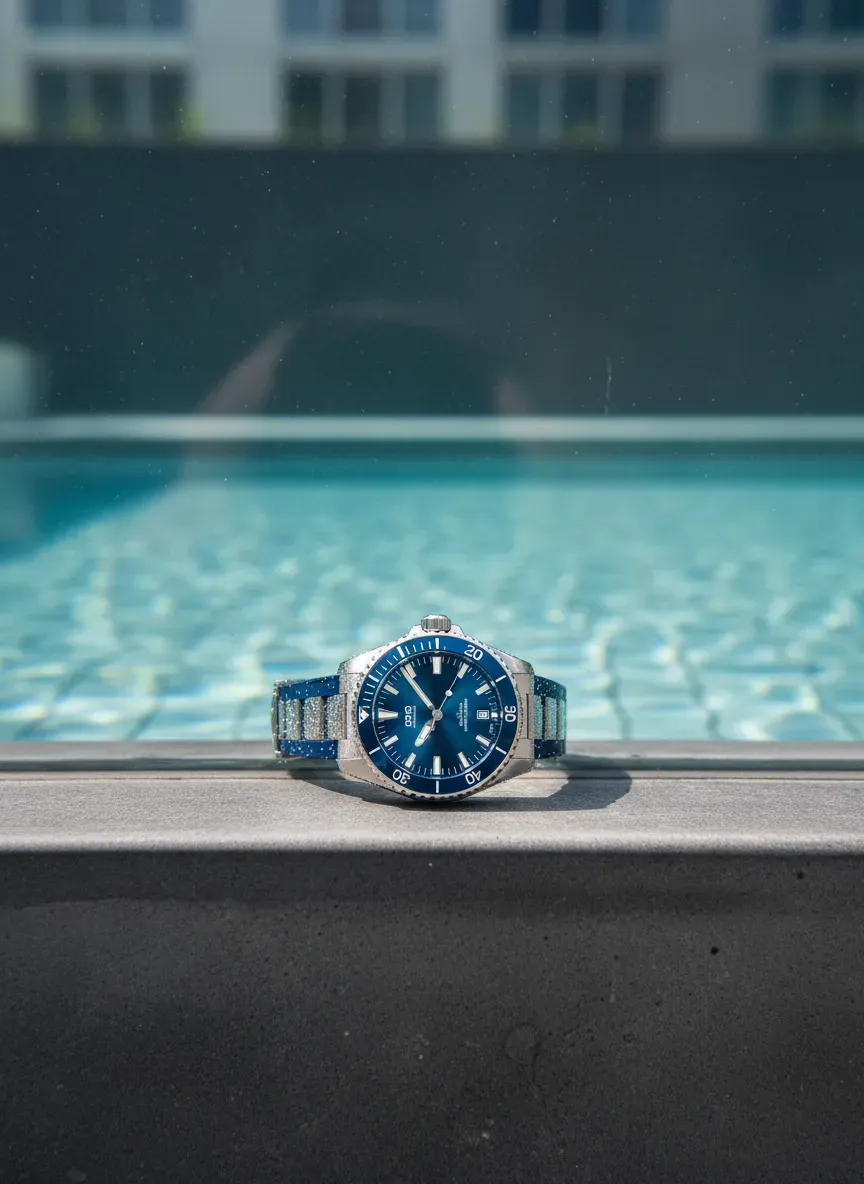
The Oris Aquis is arguably the best dive watch you can buy under $2,500. It doesn’t look like a Submariner copycat; it has its own integrated-lug design language, a ceramic bezel that feels substantial, and a dial depth that rivals watches twice the price.
Then you have the Big Crown Pointer Date. It’s charming, idiosyncratic, and functionally unique. The pointer date complication is a signature Oris feature that connects the wearer to the brand’s aviation history dating back to 1938.
Why choose Oris over a vintage Air-King?
- Modern Reliability: You get a new watch with a warranty.
- Unique Complications: Oris plays with depth gauges and 10-day power reserves (in their Calibre 400).
- No Waitlists: You walk in, you buy it, you enjoy it.
It is undoubtedly one of the 7 Underrated Luxury Brands that deserves more wrist time in the enthusiast community. While you might not get the same resale retention as the Crown, you get a lot more watch for your dollar.
For a robust diver that stands on its own merits, the Oris Aquis Date is a contender that demands respect.
Speed and History: Affordable Luxury Chronographs
Let’s shift gears. Maybe you don’t want a simple three-hander like the Ranger or the Air-King. Maybe you feel the need for speed. You want pushers, sub-dials, and a tachymeter scale.
Chronographs are notoriously expensive to service and manufacture. This is why a Rolex Daytona is unobtainable for mere mortals. However, the market is full of incredible “racing” watches that capture the spirit of automotive history without requiring a second mortgage.
When looking at this category, we often see battles like Tag Heuer vs Longines, where heritage meets modern production. But you don’t have to spend $5,000 to get a great mechanical chronograph.
The Tachymeter Titans
If we look at the affordable luxury segment, we are focusing on watches that celebrate the golden era of motorsport.
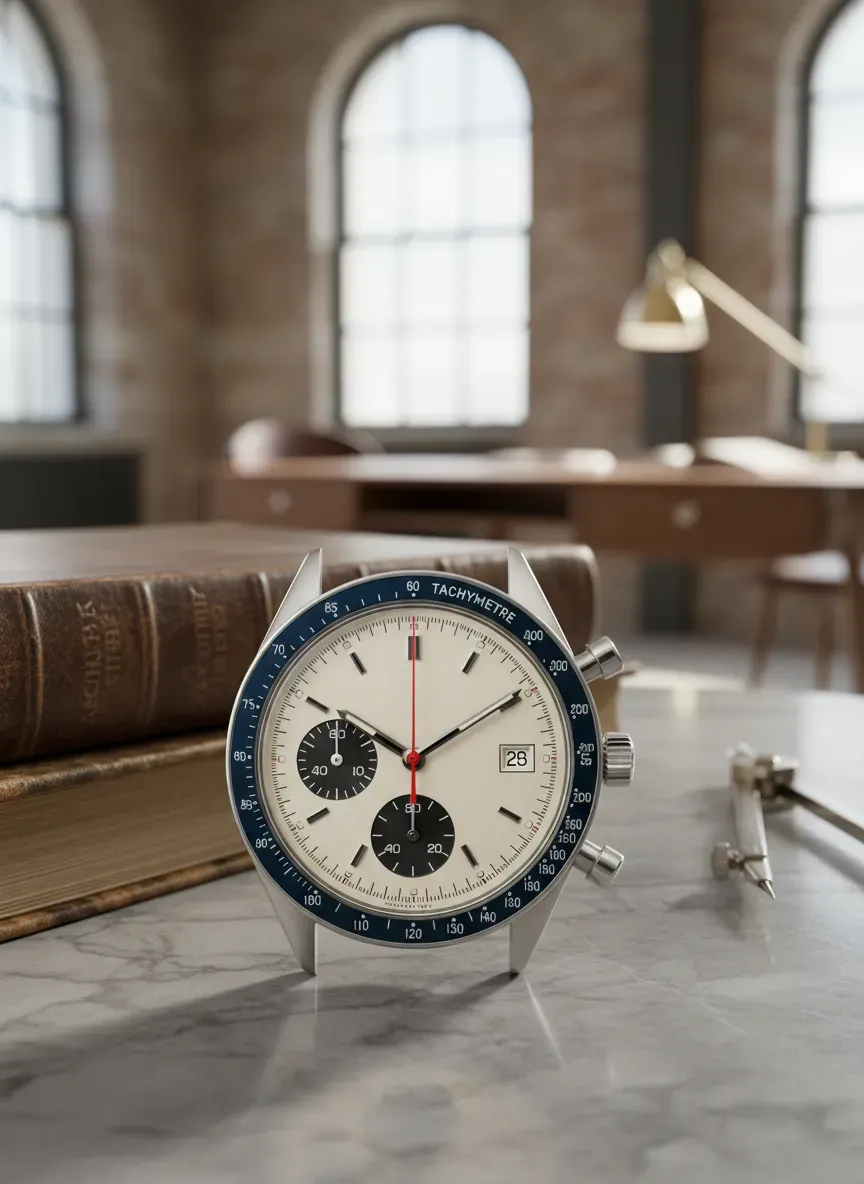
- Hamilton Intra-Matic Auto Chrono: This is a 1960s dream reborn. With its “panda” dial configuration, it screams vintage racing. It uses the H-31 movement, a modified Valjoux reliable workhorse with increased power reserve. It looks just as good at a track day as it does in a boardroom.
- Tissot PRX Automatic Chronograph: A polarizing design, but undeniable value. It brings the integrated bracelet sports watch trend into the chronograph realm. It’s chunky, it’s bold, and it feels like a 1970s Formula 1 pit lane on your wrist.
- Bulova Lunar Pilot: While technically a quartz (high-performance quartz, to be exact), it has legitimate space history, having been worn on the moon. It offers that “Speedmaster” vibe for a fraction of the cost, with incredible accuracy.
For those who want that vintage panda look without the vintage headache, the Hamilton Intra-Matic is a standout choice.
Comparing the Cheapest Entry into the Rolex Family Against Its Modern Sibling
Now, we circle back to the main event. The title fight. We have looked at the alternatives, but the heart wants what it wants.
The Air-King is the cheapest entry into the Rolex family. That is its blessing and its curse. Because it is the “cheapest,” it carries a stigma among some snobs as the “entry-level” Rolex. But real collectors know better. The Air-King is clean. It lacks the cyclops lens (the date magnifier) that clutters the Submariner and Datejust. It is symmetrical perfection.
The Movement: Caliber 3000/3130 vs. MT5402
The older Air-Kings run on workhorse Rolex movements. They are tanks. A watchmaker can service a Caliber 3000 blindfolded. However, they are older technology. They are susceptible to magnetism, and the power reserve is usually around 48 hours.
The Tudor Ranger’s MT5402 is Silicon-equipped. It is non-magnetic. It has a 70-hour reserve. In a blind spec-sheet battle, the Tudor demolishes the vintage Rolex. It is objectively the superior engine.
The “Feel” on the Wrist
This is where the subjective magic happens.
- The Air-King: Disappears on the wrist. It slides under any cuff. It feels elegant. The steel has a luster that Tudor’s brushed finish doesn’t quite match. Rolex uses 904L steel (on newer models, though vintage uses 316L), which polishes up incredibly well.
- The Ranger: Feels like a tool. It has a utilitarian, matte finish. It doesn’t sparkle; it absorbs light. It feels solid, heavy, and ready for a hike. The 39mm size is the modern sweet spot.
The Verdict
If you buy the Tudor Ranger, you are buying a watch for you. You are buying it because you appreciate the tech, the comfort of the T-fit clasp, and the rugged aesthetic. You are getting the best field watch currently on the market under $4,000.
If you buy the Rolex Air-King, you are buying an asset and an icon. You are buying it because you want to look down and see the Crown. You are accepting that the bracelet rattles and the lume is dead, because the name on the dial opens doors and starts conversations.
There is no wrong answer, only a choice between the romance of the past and the engineering of the present.